How to weigh your cattle for iPhone using artificial intelligence
Announcements
Weighing your cattle on iPhone using artificial intelligence is a reality that transforms herd management. This technology allows you to get accurate estimates of the weight of animals without using conventional scales, just by photographing them with your smartphone.
Artificial intelligence revolutionizes livestock by analyzing images and extracting biometric data from cattle in seconds.You no longer need to invest in heavy equipment or deal with animal stress during traditional weighing, making management more agile and humane.
The workings of AI weighing technology on the iPhone
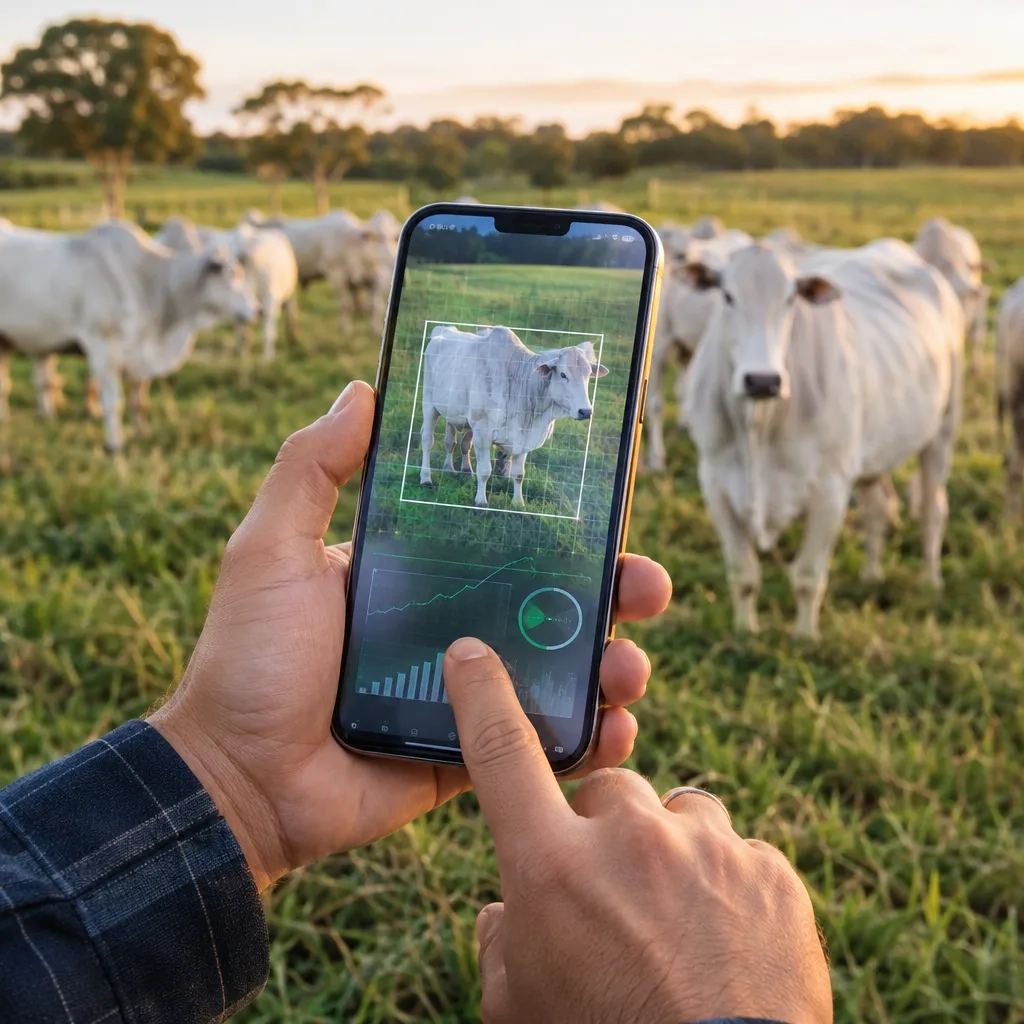
The technology uses computer vision algorithms to analyze the silhouette and body proportions of the animal in the photograph. When you take a picture of the bovine in a specific position, the application maps reference points such as height, length and width of the body, converting these measurements into weight estimates very close to the real ones. This process takes only a few seconds and requires only your iPhone with proper camera.
Announcements
The artificial intelligence algorithm has been trained with thousands of images of different breeds and sizes of cattle to ensure accuracy.The better the quality of the photo and the more correct the positioning of the animal, the more accurate the weight estimate provided by the system. You can make multiple readings of the same animal on different days to track weight gain over time.
The iPhone camera captures high-resolution data that the application processes in real time through machine learning models. These models learn to recognize specific characteristics of each breed, such as muscle and bone structure patterns, comparing with a reference database. The result is an estimate that can vary in only 2% to 5% of the actual weight, which is considered excellent for livestock management purposes.
 Animal Weight – Pigs and Cattle
Classification:
^^^^^^^^^^^^^^^^^^^^^^^”’
3.75
Age Classification:
Free Classification
Author:
HorDev
Platform:
Android
Price:
Free
▶Download on Google Play
Practical advantages of weighing by artificial intelligence
The greatest advantage is the elimination of animal stress during the weighing process. Cattle feel less fear when they are in their natural environment, photographed quickly and discreetly, compared to the trauma of being led to a weighing corral where they find strange equipment and confinement.The animals have less production drop and better general well-being when they are not subjected to repetitive handling of scales.
You save significant time in the daily management of the herd, since weighing takes a few minutes for an entire batch. With conventional scales, weighing 50 heads of cattle can consume two hours or more, involving heavy manual labor and risk of accidents. Through the iPhone, you perform the same work in 20 to 30 minutes, alone or with a single assistant, recording data in real time on the device itself.
Reducing operating costs is another immediate benefit you experience. There is no need to invest in sophisticated electronic scales, specialized containment structures or constant maintenance of these equipment. An iPhone and an internet connection transform your weighing method, eliminating recurring expenses with maintenance of scales and physical structures that take up space and require frequent calibration.
Individualized cattle tracking becomes practical and accessible for properties of any size.You can track the daily weight gain of each specific animal, identifying which perform best and which may be in poor health or nutrition.This information directs genetic selection decisions and nutritional adjustments with precision impossible with traditional quarterly weighing.
Actual scenarios of use on various properties
A dairy farm in the southern region of the country has implemented the technology to monitor weight gain of heifers destined for disposal or replacement. The farm manager uses the iPhone every morning to photograph a group of ten animals, recording data in a spreadsheet that he then shares with the veterinarian. In this way, I decided which heifers to sell in advance when they reach market weight, optimizing the cash flow of the property without relying on monthly weighing at the veterinarian.
A beef cattle producer in Goias uses AI weighing to make online auctions more competitive and safe. When it offers animals, it provides photos taken by the application along with weight estimates, allowing buyers in other regions to evaluate cattle with confidence without displacement. Its auctions have prices 8% to 12% higher because buyers are safe in the data provided and avoid unpleasant surprises when receiving the animals.
A cooperative of purebred breeders implemented the system to validate genealogies and registration data. Each animal photographed by the iPhone generates a history of weight gain that is linked to its genealogical record, creating credibility with international registrars and buyers. This practice has made their animals more valued in the export market, increasing the average price per head by 15% compared to the previous year.
An integrator working with feedlots in partnership system uses technology to track the performance of batches from different suppliers. The iPhone app allows the manager to take standardized photos of the animals weekly, generating weight gain charts that demonstrate which producer provides the best animals. This information feeds future price negotiations and improves the selection of productive partners.
A small family estate that raises few cattle uses AI weighing for recreational and educational purposes with children. Family members take pictures of the animals and track growth through an intuitive app, making management an interesting activity that teaches about agricultural management from an early age.
Technical requirements and how to get started
Your iPhone should have a camera of at least 12 megapixels to capture images with sufficient quality for AI analysis. Models from the iPhone 11 perfectly meet this need, but even older iPhones usually work properly depending on the specific application you choose. Natural lighting is essential, so photograph the cattle during the day with the sun illuminating the animal laterally for better definition of contours.
You need an internet connection, although some apps work with offline processing stored on the device. Most platforms synchronize data in the cloud to create histories and generate reports, so a Wi-Fi connection or mobile data allows better experience. Download the appropriate app from the App Store, create an account and follow the calibration tutorial that usually involves photographing a known reference object to adjust accuracy.
Correct positioning of the animal is critical for accurate results, so always photograph the bovine from the side, in a still or calm position, with all four legs visible and aligned. Avoid top-down or very oblique angles that distort the silhouette. With these simple practices, you get consistent and reliable estimates that continuously improve as the application learns from your specific data.
Accuracy and limitations you should know
AI weighing technology offers accuracy between 92% and 98% when compared to electronic scales under optimal photography conditions.This margin of error is fully acceptable for handling decisions and even for negotiations, as you get consistency and traceability impossible with other fast methods.However, in situations where accuracy is critical, such as in high-value transactions, it is prudent to confirm with traditional weighing as final validation.
Artificial intelligence may have difficulties with very dirty, wet or extremely dull animals that create little definition of contour. Very distinct breeds or unusual crosses may result in less accurate estimates if the AI model has not been extensively trained with that specific type of cattle. You get around this by taking multiple photos of the same animal at different times and enjoying constant feedback to refine the photographing technique.
The dependence on camera quality and lighting means that you get better results outdoors during the day than in indoor stables with artificial lighting.It is also important to keep the iPhone clean and without harmful camera protector, as any obstacle reduces the quality of the processed image. Knowing these limitations allows you to maximize the usefulness of the tool in your specific working context.
Integration with herd management systems
Many AI weighing applications integrate with broader livestock management software, synchronizing weight data with health, food and reproduction histories. You can view a complete dashboard on each animal, combining the weight estimate obtained by the iPhone with other information such as date of last vaccination, number of births or result of the last veterinary examination. This integration transforms isolated data into strategic information for decision making.
The automatically generated report by the system allows you to identify herd performance trends such as average monthly weight gain, variability between individuals and comparison of groups of animals with different feeding strategies. With these analyzes, you justify investments in nutritional or genetic improvements with concrete data instead of empirical assumptions. Most software offers export reports in standard formats compatible with spreadsheets and accounting systems of the property.
For properties that work with multiple users, the technology allows different team members to contribute data through their own iPhones, synchronizing everything in a central database. One employee photographs animals on pasture, another records nutritional data, and the manager accesses everything through a web panel on his computer. This real-time collaboration eliminates information bottlenecks that impair efficiency on larger properties.
Comparison with traditional weighing methods
The traditional electronic scale offers greater accuracy in absolute terms, reaching up to 99.5% acuity, but requires expensive infrastructure and causes significant animal stress. AI weighing sacrifices a few tenths of a percentage point in accuracy to gain agility, cost reduction and animal welfare that directly impact productivity.For most modern livestock management scenarios, this tradeoff largely favors AI technology.
The traditional visual method, where experienced breeders estimate weight by observation, offers only 60% to 75% accuracy and is extremely subjective and dependent on individual experience. Artificial intelligence dramatically outperforms this method in all dimensions, being more objective, reproducible and accurate. Even breeders with decades of experience recognize that AI provides more reliable estimates than their empirical judgment, especially when observing multiple animals daily.
Body weighing tape, an inexpensive tool used in small farms, provides estimates ranging from 80% to 90% accuracy depending on the application technique. AI offers a smaller margin of error with less variability between different measurements, as well as generating digital records automatically. For expanding properties that grow beyond the familiar model, the migration of AI tape to iPhone is natural and economically feasible.
Infrared imaging weighing or other sophisticated methods exist, but require specialized equipment much more expensive than an iPhone. The competitive advantage of AI on the iPhone is precisely in using technology you already have, reducing entry barriers for small and medium-sized producers who historically did not have access to advanced monitoring systems. This democratization of technology represents a paradigmatic change in access to management tools on rural properties.