How the App Works to Alphabetize Adults
Announcements
Adult literacy is a real challenge in many parts of the world, and technology has been transforming this reality. Specific applications to teach reading and writing work as virtual tutors, accessible 24 hours, adapting to the rhythm of each person.
You can imagine that learning to read and write as an adult is an intimidating process, fraught with social embarrassment.However, modern platforms have been designed precisely to offer privacy, flexibility and a clear progression, allowing anyone to build this fundamental competence without external pressure.
The Basic Functioning of a Literacy App
An adult literacy app acts as an adaptive teacher inside your phone or tablet. The system identifies the initial level of the user through a quick diagnosis and from there, sets up a personalized learning trajectory that respects the individual speed and learning style of each person.
Announcements
Most of these applications use artificial intelligence to analyze the mistakes made during the lessons.When you make a mistake when identifying a letter or trying to spell a simple word, the algorithm marks that point and reinforces the content in the following exercises until you master the matter completely.
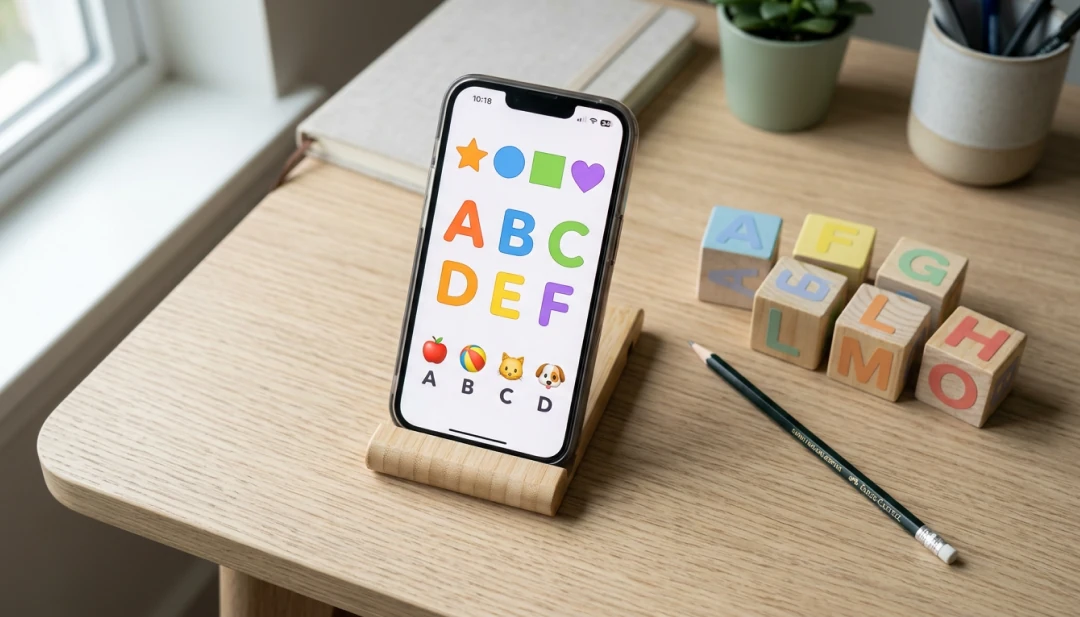
The interface of these apps is typically colorful, intuitive and gamified to make learning less arid.You are not only solving exercises: you are also unlocking levels, collecting points, advancing through phases and receiving visual rewards that reinforce the sense of progress and achievement.
 Palma School
Classification:
”’I think it’S.
4.55
Age Classification:
Free Classification
Author:
Innovation, Education and Technology Solutions – IES2
Platform:
Android
Price:
Free
▶Download on Google Play
Lesson Structure: From Recognition to Full Text
The progression of learning in a literacy app follows a well-defined logic that begins with letter recognition. In the first step, the user sees a letter and hears its sound, repeating it verbally or selecting the corresponding image, consolidating the association between visual form, sound and writing.
After mastering the individual letters, you move on to the simple syllables, combining two or three letters to form sounds. The app presents a syllable, shows examples of words that contain that syllable and asks you to identify it in different contexts, ensuring robust memorization.
The third phase focuses on small and medium-sized whole words.You work with everyday terms such as names of fruits, animals and common objects, always with support of images and audio to reinforce the meaning and correct pronunciation.
The fourth step introduces short sentences and short texts, connecting the words learned in real communication contexts. Here you begin to read a complete sentence, then answer questions about the read text, developing genuine understanding and not just decoding symbols.
Finally, the app offers lessons with more extensive texts, simple stories and authentic writing exercises, where you need to not only read, but also produce words and phrases on your own, consolidating both reading and writing simultaneously.
Pedagogical Approaches Within Applications
Different apps adopt different teaching methodologies, and you can find from pure phonetic-based approaches to syllabic or global methods. The phonic method, very common on these platforms, teaches the sounds of letters and how to combine them to read words, starting from the premise that you first master the letter-sound relationship.
The syllabic method, in turn, groups letters into syllables from the beginning, allowing you to read whole words faster, which can be especially motivating for adults who want to see practical results in a short time.
Many modern apps combine these approaches in a hybrid system, using phonetics to build solid decoding skills, but also presenting common words visually from an early age to quickly increase recognized vocabulary.This methodological flexibility means that the app adapts to your learner profile, testing which strategy works best for you.
Some apps also include visual memory techniques, associating colors, shapes and patterns with letters and words, making it easier to retain them especially for adults who may have difficulty with purely abstract learning.
Real Use Cases: How Adults Transform Their Lives
A common scenario is that of a professional who works in a field that did not require formal reading, such as agriculture or construction, and who at 35, 40 or 50 years, realizes that not knowing how to read and write properly limits him professionally. This adult can use an app for an hour every night, progressing steadily without abandoning his job, and in six months have solidified functional literacy.
Another real case is the migrant who speaks Portuguese fluently, but never learned to read in the language because he moved to the country as a teenager or adult. An app offers exactly what he needs: practical literacy in Brazilian or Portuguese, with culturally relevant examples, significantly accelerating his process of social and professional integration.
There are also elderly people who, retired and with time available, want to learn to read and write to fulfill a personal dream or to improve their independence in everyday digital tasks. These users benefit enormously from customization, because the app does not pressure them, allows unlimited repetition and works at a speed compatible with the typical working memory of this age group.
Mothers who have interrupted formal education and wish to be a role model for their children find in the app a discreet and accessible tool to study while they fulfill their domestic routines, using free moments to advance in the lessons without embarrassment before the community.
People with dyslexia or other learning disorders also find in alphabetical apps valuable tools, since controlled repetition, immediate feedback and the absence of social pressure create an optimized environment for their learning, allowing progress that may have been blocked in traditional environments.
Interactive Resources and Technology Support
The best literacy apps include professional-quality audio, recorded by native speakers, so you hear the correct pronunciation of each letter, syllable and word. This auditory dimension is critical for adults, as it activates auditory memory and facilitates the naturalization of language even before being fully literate.
Many apps also offer the ability for you to record your own voice and compare to the standard, receiving feedback on pronunciation. This feature is particularly valuable in contexts where the language is foreign or where accent and intonation are legitimate concerns.
Digital writing slates or spaces allow you to practice forming letters with your finger on the screen, developing the fine motricity associated with handwriting even in a digital environment.The application recognizes the shape of the letter and offers corrections, helping you refine the handwriting and the correct stroke.
Certificates and progress reports are automatically generated, allowing you to track your performance in charts and statistics.These reports can be shared with a mentor, teacher or educational advisor if you are participating in a formal adult education program.
Cloud sync lets you start a lesson on your smartphone while commuting to work and finish on the tablet at home, keeping your progress intact and continuous, an important differentiator for adults with irregular routines.
Pedagogical Challenges and How Apps Face Them
A real challenge in adult literacy is the lack of initial motivation, since the adult may feel unmotivated or embarrassed. Apps face this through gamification, offering immediate visual progression, small constant wins and the sense of agency you control the pace, choose when to study and are never ridiculed for mistakes.
Another challenge is the transition from decoded letters to genuine sense understanding.Many adults can spell but do not understand the meaning of words. Apps work around this by associating images with texts, placing vocabulary in meaningful contexts and offering comprehension exercises from the first lessons, not just at the end.
The lack of connection between digital learning and real-life application is a third obstacle. More sophisticated applications solve this through realistic scenarios: shopping in the supermarket, reading documents, filling out forms, communicating by messages, all simulated within the app with practical and immediate feedback.
The apps use repeated spacing algorithms, adapted Leitner algorithms, to ensure you review information at the exact moment before forgetting, consolidating long-term memory instead of short-term fragile memory.
The difficulty in dealing with spelling variations, regionalisms, and exceptions to the rule is faced through progressive exercises that feature naturally integrated exceptions, not as a bunch of abstract rules to memorize, but as patterns you discover through repeated exposure.
Practical Implementation: How to Start Your Learning
The first step is to install a reliable literacy app on your mobile device. You will make a basic record, usually with email or phone, and the app will ask you for some demographic data to customize the experience, such as your age, native language and motivations for learning.
Then you will complete a short diagnostic test, answering questions that assess your current level.Don’t worry about getting it right: the goal of the test is to genuinely find out where you are to offer the most efficient path.You may be at the stage of recognizing only a few letters, or you may already have partial skills that the app needs to catalog.
After diagnosis, the app will present a personalized study plan with time estimates to achieve specific milestones.You will set realistic goals, maybe 15 minutes daily, and commit to a consistent routine is more important than long sporadic sessions.
Start each session with the recommended lesson by completing all exercises until the app indicates sufficient mastery.Do not skip steps just because they seem easy; this controlled progression is exactly what differentiates an effective app from a casual game.
As you progress, you will notice the ability to read labels, signs, simple messages in your everyday life. Capitalize on these moments: read a menu, a recipe, a message from a friend aloud using the techniques of the app. This practical application accelerates consolidation and offers organic motivation, showing that your learning has immediate real utility.
Stay in touch with a community of learners, if the app offers forums or groups, and don’t hesitate to seek human support when you really need it. Many apps connect you to volunteer tutors or educators who can answer questions that the algorithm can’t solve in isolation.