App to Weigh Your Cattle
Announcements
An application to weigh your cattle by mobile using artificial intelligence is a technological solution that allows you to estimate the weight of the animal by capturing only a photo with your smartphone. This tool significantly reduces the time required for weighing and makes the process much more practical and accessible to any rural producer.
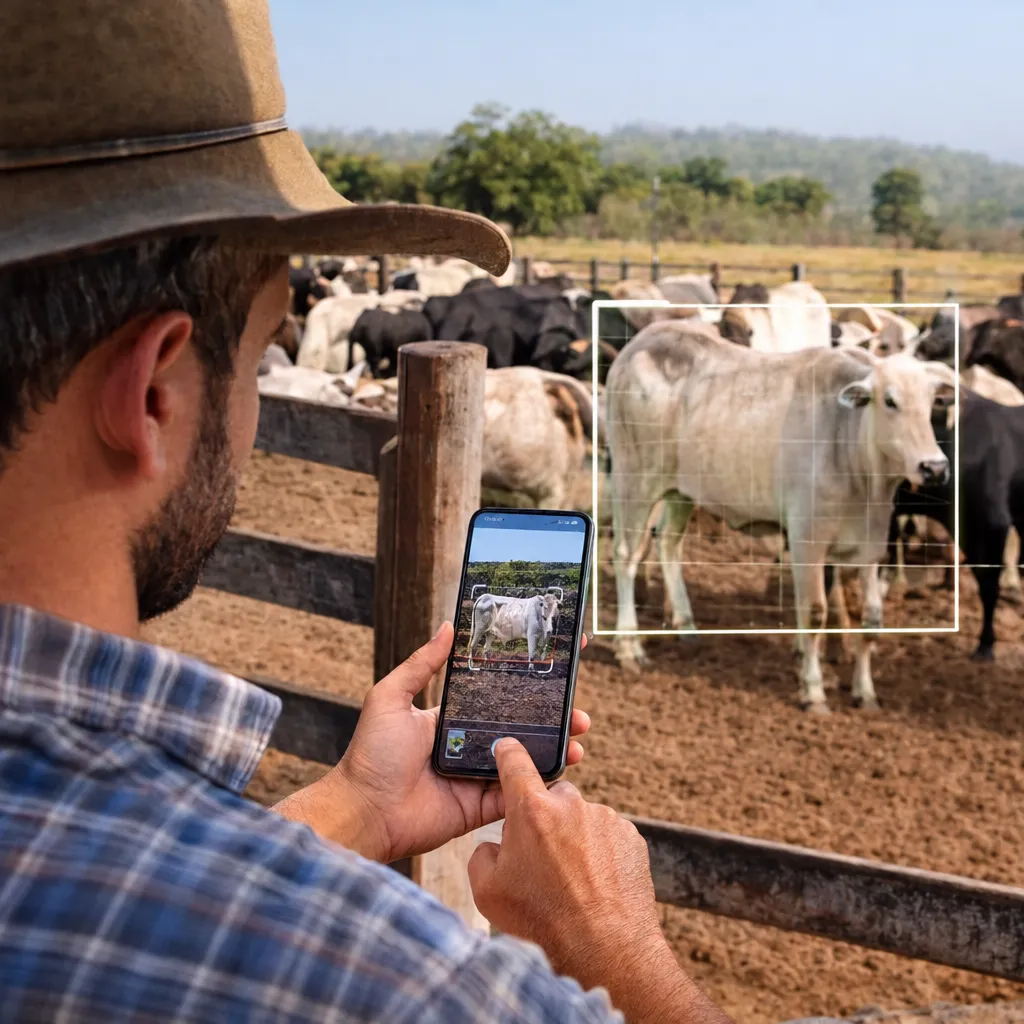
The artificial intelligence technology behind these applications works by analyzing the proportions of the animal in the image and comparing them with an extensive database of breeds and measurements.The algorithm identifies specific characteristics of cattle, such as height, body length and chest circumference, using this information to calculate an accurate estimate of the total weight of the animal without the need for a conventional scale.
Announcements
To use the application, you start by downloading the program on your smartphone and creating an account. Then, you position your cattle in a well-lit place and maintain an appropriate distance to capture the entire body of the animal on the screen. The camera of the mobile phone records the image, the algorithm processes the data in a few seconds and you receive the weight estimate on the screen of your device itself, being able to save the history to follow the evolution of the herd.
The quality of the photo is essential to obtain more reliable results with the application. You should photograph the animal in the lateral plane, ensuring that the whole body is visible from the head to the tail, and avoid very inclined angles or positions where the cattle are lying. A suitable natural lighting, preferably during the day with the sun not too strong, helps to reduce shadows and allows the camera to capture all the details necessary for a more accurate analysis by artificial intelligence.
The margin of error of such an application usually varies between 2% and 8%, depending on the breed of the animal, the quality of the image and the conditions in which the photo was taken. This accuracy is considered acceptable for many farmers, as it offers a quick and sufficient result for decisions about feeding, health and marketing of the herd, although it is inferior to the accuracy of a traditional electronic scale.
The benefits for the farmer are multiple and significant when you implement this type of tool in the routine. You save time that would be spent moving the cattle to a fixed scale, reduce the stress of animals that do not need to be contained or moved abruptly, and can make more frequent follow-ups of herd development without additional cost per weigh, since most applications work with an affordable subscription model.
When using the tool, you should be aware of some important precautions to maximize the reliability of the results. Avoid photographing the cattle when it is very dirty or covered with mud, as this impairs the visual analysis of the application; always confirm that the breed of the animal is correctly selected in the system, as different breeds have different proportions that influence the calculation; and regularly compare the estimates of the app with real scale weighings to validate that the application is working well with your specific animals.
The app acts as a practical complement to traditional livestock management and should not completely replace conventional practices, especially in critical situations where you need absolutely accurate data.For large-scale negotiations, important sales or animal health decisions that require full accuracy, you should continue using certified electronic scales, but you can use the app for routine monitoring, growth tracking and daily herd management with confidence.
» Weigh your Cattle! «AndroidMany producers face common doubts when starting to use this technology and it is important to clarify the main points that generate uncertainty. The quality of the result depends a lot on the camera of your smartphone, because devices with more modern cameras and better resolution capture details that help the algorithm to be more accurate in the estimation. You can also use the app in different breeds of cattle, although each has specific models for better analysis, and the tool works both on animals kept in pasture and in confinement, adapting to the type of breeding you practice.
How Artificial Intelligence Performs Weight Estimating
The operation of the artificial intelligence algorithm is based on image processing and deep neural networks trained with millions of cattle photos. When you take a photo of the animal, the application detects the key points of the cattle body, such as shoulders, hips, chest and limbs, using computer vision algorithms to map these structures. From this mapping, the system calculates body proportions and compares them with known weight patterns, generating a reliable estimate in a matter of seconds.
The learning model used is constantly updated with new images and real weighing data provided by users. The more people use the application and confirm that the estimate was correct comparing to real scales, the better the algorithm for future predictions. You indirectly contribute to improve the tool every time you use, as the data collected helps to refine the calculation models for different breeds, ages and animal health conditions.
One of the advantages is that processing often takes place in the cloud, which means that you do not need a top-of-the-line smartphone to get good results. The application sends the photo to servers where complex analysis is performed, and only the result comes back to your device, making the tool accessible even for older devices or with less processing power.
Practical Step by Step to Use the Application
The first step is to download the application from the app store of your smartphone, whether Android or iOS, and install normally like any other program. After installation, you need to create a personal account providing basic information and confirming your email, which usually takes only a few minutes and is done once.
Within the application, you must register your producer profile, informing data about your property, the type of breeding you perform and the breeds of cattle you own. This information helps to customize the recommendations and calculations of the app for your specific situation, making the estimates more relevant to your production context.
To start a weighing, you open the application and select the option of re-measurement or take photo, depending on the specific interface. The app displays a guide on the screen showing how to frame the animal, usually asking to position it so that the whole body is visible from a specific side angle. You position the cattle following these instructions and capture a clear and well-lit photo.
After taking the photo, you may receive adjustment suggestions if the image does not meet the quality criteria, such as inadequate framing or insufficient lighting. If necessary, you take a new photo following the recommendations, and as soon as the image is accepted by the system, processing begins and you receive the result in a few seconds on the screen.
The result is displayed as a weight estimate in kilograms, usually accompanied by a confidence interval that indicates the margin of uncertainty of the calculation. You can save this measurement in your record history, add notes on the condition of the animal or photo, and use this data to track the development of livestock over the months.
Importance of Lighting and Correct Angle
Lighting is one of the most critical factors to obtain accurate estimates with the application, because shadows and reflections can confuse the algorithm in identifying the body structures of the animal. You should prefer to shoot during the day with natural light, avoiding times with very pronounced shadows or very direct light that creates extreme contrasts. A uniform and soft light, typical of cloudy days or in the periods of beginning or end of the day, is usually ideal for this type of capture.
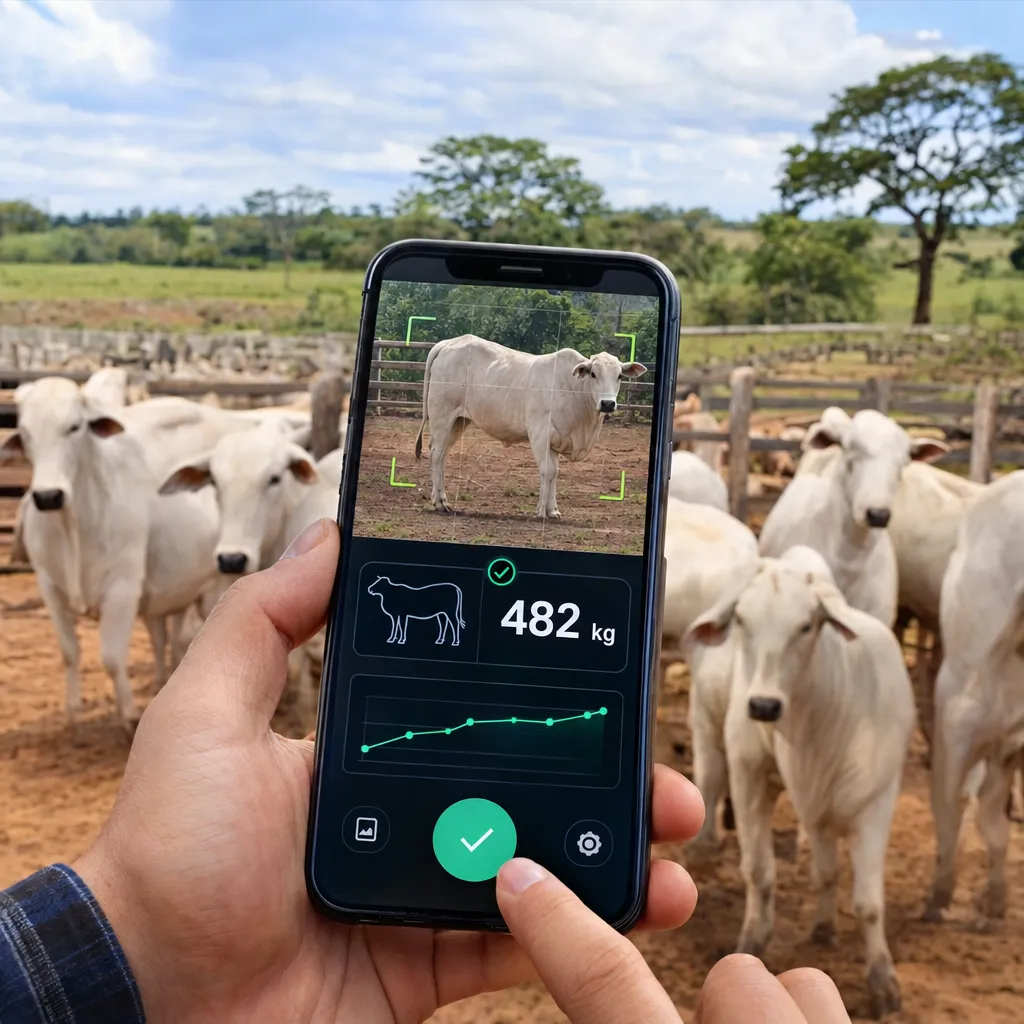
The angle of photography is also absolutely essential for accuracy, and most applications specify exactly which position is needed to best work. You should photograph the cattle in a totally lateral way, ensuring that the camera is at the same level as the average height of the animal, not too high or too low, as angles from top to bottom or from bottom to top distort proportions and impair calculation. Distance also matters, and you should stay at a distance where the entire body of the animal fits on the screen without important parts getting cut or too close causing distortion.
The animal should be in a natural and relaxed position during the photo, preferably standing with its legs aligned symmetrically, because twisted or lying positions compromise the reading of body proportions. You get better results shooting in clean environments, without much visual interference of objects in the background that can distract the algorithm, although many modern apps can ignore complex backgrounds.
Realistic Accuracy and Error Margins
When you use a weight estimation app per photo, it is important to understand that the result will never be 100% accurate as a certified scale, and this limitation is completely normal and expected. The typical margin of error is between 2% and 8%, which means that if the cattle actually weigh 500 kilograms, the app may indicate somewhere between 460 and 540 kilograms depending on the quality of the photo and the characteristics of the animal. This variation is small enough for practical handling purposes, but it means that you should not use this tool for high monetary value transactions based purely on weight.
Accuracy varies significantly by breed, as algorithms work best with the breeds in which they were most trained. If you create a common breed such as nellore or angus, estimates tend to be more accurate than for exotic breeds less represented in the training data of the app. The age of the animal also influences the margin of error, and young calves usually have less accurate estimates than adult animals with more stable body proportions.
The conditions of the animal on the day of the photo greatly affect the result, because a cattle too full after eating, too full of water or too empty will have different proportions of its real weight. You can get better correlations between app estimates and real scales if you always photograph the animals in similar conditions, such as at the same time of day or after similar periods of feeding, thus establishing a comparable baseline to follow evolution.
Practical Benefits for the Rural Producer
The biggest benefit of using such an app is the time savings on the day-to-day property, as you don’t have to move cattle to a scale or hire weighing services that consume hours of work.You can do multiple quick weigh-ins directly on the pasture or in the bay, collecting frequent data without major operational effort, which is especially valuable if you manage a large herd.
Another significant benefit is the reduction of animal stress caused by movement, contraction in scales or compression in brete, factors that affect the welfare of animals and can influence weight gain and productivity. With the app, you keep the cattle in a natural and comfortable environment during the measurement, just taking a photo of where the animal is already. This lower stress improves the overall health of the herd in the long term.
For management decision making, you benefit greatly from having more frequent and accessible historical weight evolution data.You can more quickly identify which animals are growing well, which are lagging behind in development, and make nutritional or health adjustments based on hard data rather than visual estimates.
The economic aspect is also favorable when you consider reduced direct costs, as most applications work with relatively affordable monthly subscription or even freemium models with free basic features. You do not pay for individual weighing, do not need to invest in expensive electronic scale or maintenance of heavy equipment, making the tool economically viable even for small and medium producers.
Care and Limitations when Using the Tool
A key care is to regularly validate the app estimates by comparing them to true scale weighings to ensure the algorithm is working well specifically with your animals.Different herds, even of the same breed, may have slightly different body proportions influenced by genetics and feeding, so it is important to confirm that the app calibrates well for your situation before relying entirely on it for important decisions.
You should avoid using the tool with very dirty, mud-covered or furry animals in very irregular conditions, as these situations impair the quality of the visual analysis of the algorithm.It is also important to ensure that the breed of the animal is correctly selected in the application before shooting, as using the wrong breed model completely distorts the calculations of proportion and estimated weight.
Do not rely exclusively on the application for critical decisions where absolute accuracy is required, such as evaluation for sale in high-value auctions, important commercial negotiations or veterinary diagnostics related to health that depend on exact weight. In these scenarios, always confirm with certified conventional balance to avoid possible financial losses or diagnostic errors that may affect the treatment of the animal.
Your internet connection during use is important in many applications that process photos in the cloud, although some have limited offline versions. If you plan to use the app in areas with weak or intermittent signal, make sure the tool you choose works well in these conditions before implementing in the routine.
The Application As a Complement to Traditional Management
You should understand that the weight estimation application is a complementary tool and not a total substitute for the consolidated livestock management practices you already use. The technology works best when integrated into a complete management system that also includes visual observation of the animal, health monitoring, nutritional assessment and, when necessary, confirmation with conventional scales to validate accuracy at critical times.
A recommended use is using the app for daily or weekly routine monitoring of herd development, generating trend data that helps you understand how animals are responding to the nutritional and sanitary management it offers. Parallel to this, you continue to do scale-confirmed weighings at least at monthly or quarterly intervals in order to validate whether the trends that the app is pointing out correspond to the reality of real weight gain.
For different production purposes, the application has variable utility that you should consider in the implementation decision. If you work with beef cattle in pasture or feedlot systems, tracking weight regularly helps optimize slaughter point and feed efficiency. If you raised dairy cattle, the app helps monitor replacement heifer development and overall herd health, although in this case weight is less critical than in beef cattle. If you work with breeding, frequent weight evolution data helps identify animals with better genetic potential for rapid weight gain.
Technological evolution in this area is continuous, with algorithms constantly improving by adding new data and more sophisticated methods. You who use the tool are now participating in this evolution, as many apps collect data on the actual accuracy of estimates and use it to train even better models. In the near future, these tools will probably become even more accurate and accessible, making them even more integrated components in modern livestock management throughout Brazil and the world.