How to Safely Monitor Your Child's Phone
Announcements
Monitoring your child’s mobile phone remotely is an increasingly common practice among parents concerned about digital security.You seek to protect your child from online predators, inappropriate content and excessive screen use, but without invading their privacy completely.
The importance of this surveillance grows as children and adolescents spend more time connected. You need to find the balance between security and trust, implementing solutions that allow effective monitoring without generating discomfort or rejection. Market trends show that best practices involve transparency, communication and use of tools appropriate to the age group.
Why Monitor Your Child’s Cell Phone
You live in a context where your children have access to a virtually unlimited world through their smartphone.Risks include contact with predators, cyber bullying, exposure to adult content and addiction to social networks.Effective monitoring reduces these vulnerabilities and provides reassurance to parents who want to keep their children safe online.
Announcements
Age is crucial to decide the level of monitoring you should implement. Children under 10 years need more rigorous surveillance, while older adolescents need greater freedom, even if supervised. You must understand that the goal is not to punish, but to educate and protect while developing digital responsibility in young people.
Recent studies indicate that children who grow up in environments with conscious monitoring and open communication develop better critical sense about the use of the internet.You can use monitoring as an educational tool, not just as a control barrier. This approach reduces the need for constant vigilance as the child matures and demonstrates responsibility.
 Chat Cloner Secretly View Chat
Classification:
”’I think it’S.
4.50
Age Classification:
Free Classification
Author:
G.K.Apps Studio
Platform:
Android
Price:
Free
▶Download on Google Play
Current Trends in Remote Monitoring
The mobile monitoring app market has evolved significantly in recent years.You find increasingly sophisticated solutions that go beyond simple location tracking, offering app monitoring, messaging, browsing history and screen time.Modern platforms also integrate educational resources that help parents and children set healthy boundaries together.
An important trend is user experience-centric design for both sides.You realize that the best tools now offer intuitive interfaces for both parents and children, reducing configuration complexity and making monitoring more natural and less invasive. Modern applications also include smart alerts that notify you only about really worrying situations, avoiding information overload.
Data security is another rising trend that you should consider. Developers of monitoring tools are implementing end-to-end encryption and compliance with regulations like LGPD to protect sensitive information from children.
Tools Available in the Market
Several applications allow you to track your child’s phone remotely, each with different features. Family Link, for example, is developed by Google and offers features of application control, screen time limit and location in real time. You install the application on your child’s smartphone and manage everything through your own device.
Another consolidated option is Screen Time, which allows detailed monitoring of time spent in each application.You can set limits by app category and receive notifications when your child tries to access restricted content. This tool is especially useful for parents who want to encourage healthier behavior regarding cell phone use without excessive authoritarian control.
Life360 is a platform focused on real-time location tracking with additional security features. You and your child create a familiar “circle” where everyone shares their location, receiving alerts when someone arrives or leaves specific places like school or home.
Qustodio stands out for its educational approach combined with monitoring.You can block categories of websites, monitor online activity and even manage screen time granularly.The platform also offers detailed reports on digital habits, allowing informed conversations between parents and children about responsible internet use.
Norton Family is another robust solution you can use to control website access, monitor browsing history, and manage downloads. This tool offers advanced features like social media monitoring and alerts for suspicious behavior, making it ideal for parents of potential at-risk teens.
How to Set Up Monitoring Properly
The first step for you to implement remote monitoring is to choose the tool appropriate to the age and specific needs of your child. You should research the available options, compare functionalities and consider its ease of use, as a complex platform can discourage its consistent use. Also evaluate the reputation of the developer and its privacy policies before making any decision.
After selecting the application, you need to create separate accounts: one for you as the responsible and one for your child. The initial configuration requires you to install the application on both devices and authorize the necessary permissions. You must carefully read each requested permission, understanding exactly what the tool will access on your child’s smartphone before confirming.
Set clear limits and rules before enabling monitoring.You must set categories of allowed and blocked applications, screen usage times, browsing limitations and any other parameter relevant to your family. This previous definition avoids surprises and demonstrates that you have thought carefully about the restrictions, making them more justifiable in the eyes of your child.
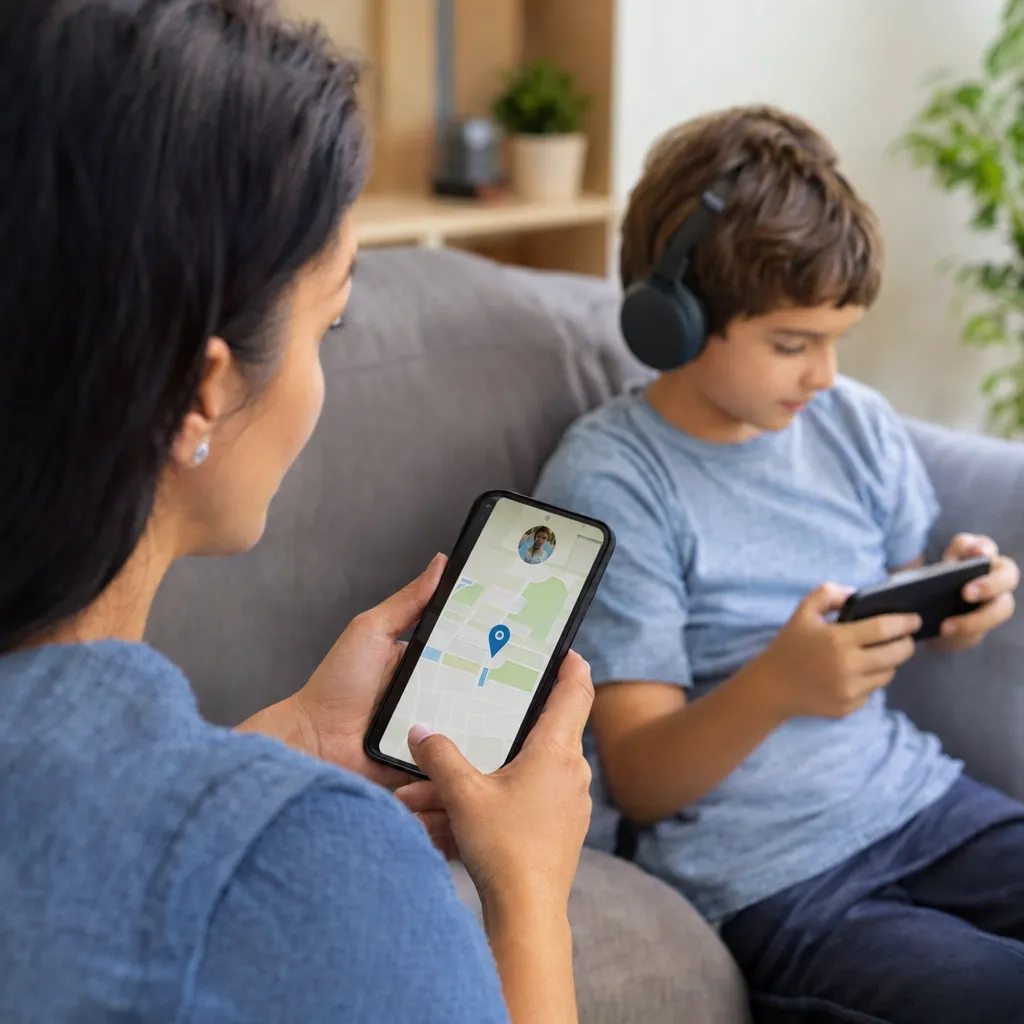
Communication with your child is absolutely critical in this process. You should explain why you are implementing monitoring, what information will be followed and how it protects you. This honest conversation reduces the feeling of invasion of privacy and turns monitoring into an agreed practice among you, not imposed unilaterally.
Good Practices for Effective Monitoring
You should regularly review the data collected by the monitoring app, not just observe automatic alerts.A weekly or monthly analysis of browsing history, used apps and behavior patterns gives you a more complete view of what your child is doing online.
Balancing vigilance and trust is critical for maintaining a good relationship with your child.You should not use collected information to constantly punish or demonstrate permanent distrust. Instead, use the data as a basis for educational conversations that help your child understand online risks and develop critical thinking.
Adapt the level of monitoring as your child matures and demonstrates responsibility. You can gradually reduce the scope of surveillance, allowing greater freedom as digital maturity increases. This progressive approach teaches that trust is earned and that responsible online behavior results in more freedom.
Keep the monitoring tool always up to date, as the latest versions often include security improvements and new functionality.You should also be on the lookout for changes to the developer’s privacy policies and review their settings periodically to ensure it remains in line with your expectations.
Educate your child about digital security in parallel with monitoring.You should teach about secure passwords, risks of sharing personal information, how to identify online predators and what to do in case of cyber bullying. This proactive education reduces the dependence on technical monitoring and develops healthy digital autonomy.
Challenges and Important Considerations
You will face potential resistance from your child when implementing remote monitoring, especially if you are a teenager in search of privacy.The initial reaction may be anger or distrust, particularly if the tool is installed without prior discussion.
Legitimate privacy is a valid concern that you should balance with security. There is information that your child is entitled to keep private, such as conversations with close friends or personal thoughts recorded in digital journals.You can set limits on monitoring, such as not following text messages word for word, keeping vigilance over risks without completely invading privacy.
The legal aspect also deserves your attention, as privacy laws vary by country and state. You should research local regulations to ensure that your monitoring is in compliance.In some places, monitoring without explicit consent of the child may violate privacy laws, especially when the child reaches a certain age.
You also need to consider that no tool is 100% effective at blocking all harmful content or preventing risky behaviors altogether. Technically skilled teens can find ways around restrictions, use alternative devices or hide activities. This reality does not mean that monitoring is useless, but that you should keep it as part of a broader strategy that includes education and communication.
Transparent Communication with Your Child
You should have an open conversation with your child before implementing any monitoring tool. Explain your specific concerns, whether it be about contact with strangers, exposure to adult content, or excessive use of social networks.This transparency allows your child to understand that monitoring comes from a place of care, not arbitrary distrust.
Invite your child to participate in the choice of the monitoring tool when appropriate. You can discuss different options available and allow him to choose among those that you consider acceptable. This inclusion reduces the feeling of imposed vigilance and increases the likelihood of effective cooperation with the established restrictions.
Make clear agreement on how you will use the information collected. You must make it explicit that you will not share monitoring data with others, that you will not use information for disproportionate punishment, and that you will respect certain privacy limits.This combination of transparency with respect builds trust even within a technological surveillance context.
Continue regular conversations with your child about their online experiences, digital friendships, and any concerns they have. You should not only use monitoring as a source of information, but create safe space for your child to voluntarily share about what is happening online.