App to Learn Zero Crochet
Announcements
Learning crochet on your phone is more practical and accessible than ever. With the right apps, you can master the basics, follow detailed videos and evolve at your own pace, without needing face-to-face classes or high investments.
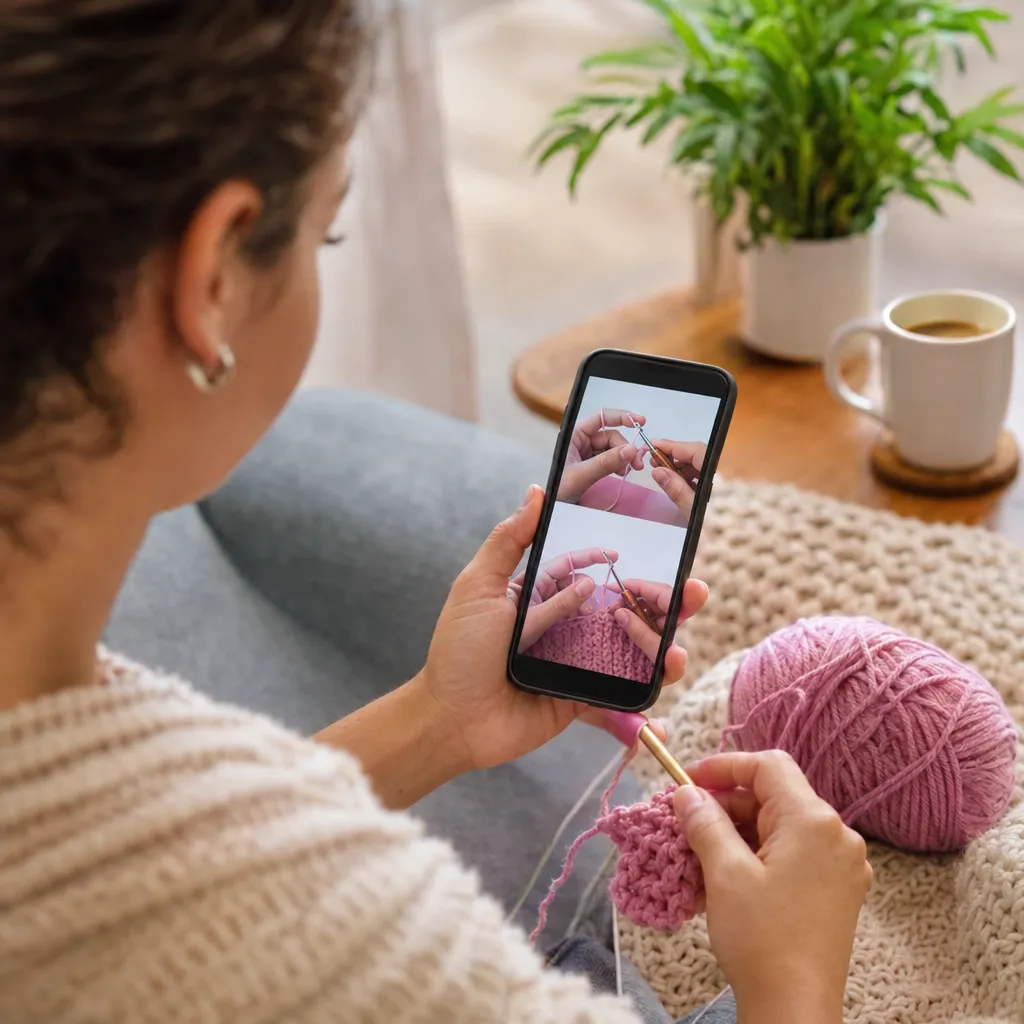
Technology has transformed the way we learn new skills, and crochet is no exception. Today there are specialized applications that bring from video tutorials to illustrated guides with step by step instructions, allowing you to have a crochet school in the palm of your hand.
Announcements
Why Learn Crochet By Cell Phone
Mobile learning offers flexibility that traditional classes never manage to provide. You do not have to go to a school, you are not stuck to fixed schedules and can take advantage of your free moments to practice and evolve. Many people find that learning crochet by mobile is more motivating because you progress visually and can compare your works with the examples of the application in real time.
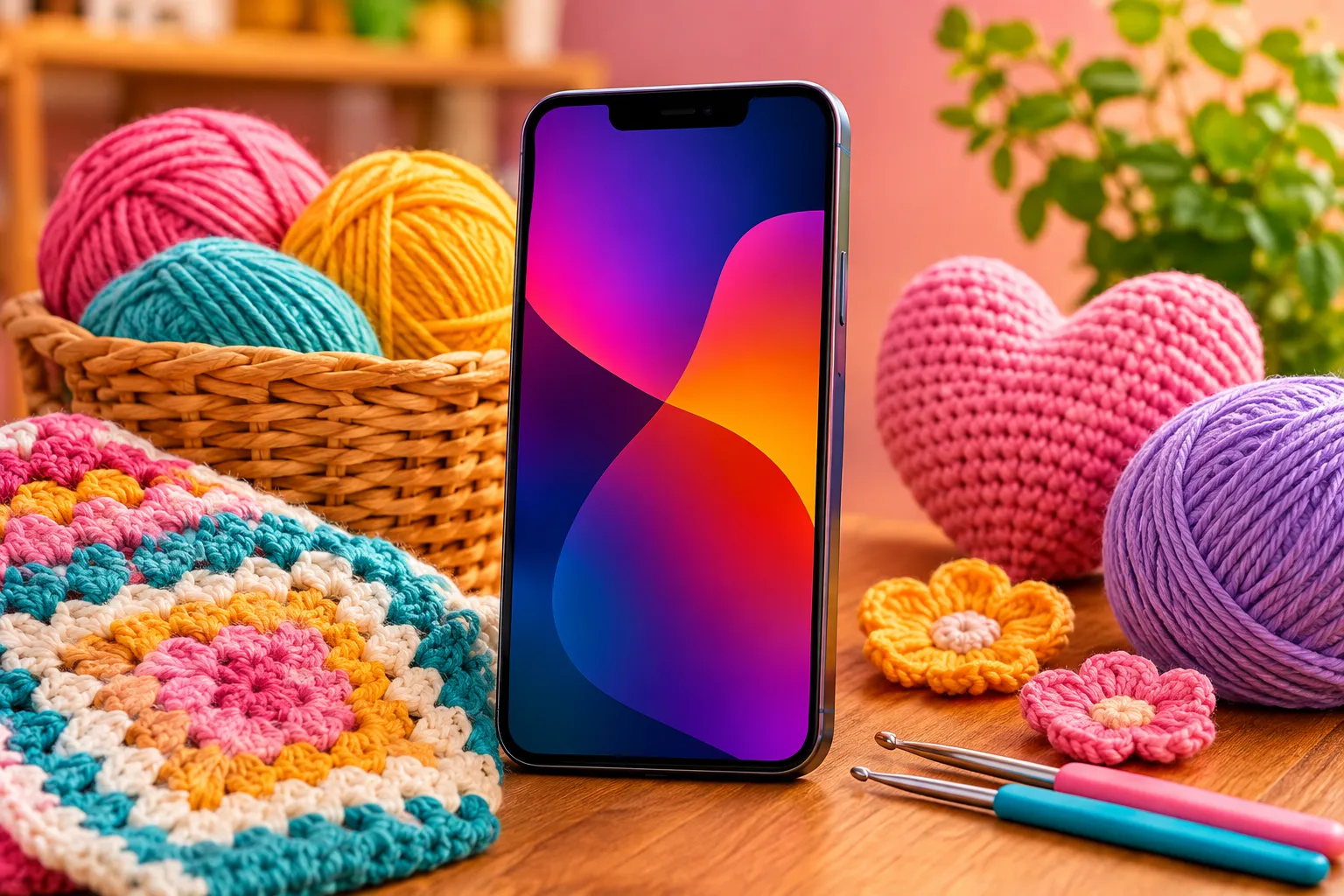
In addition to convenience, apps for learning crochet significantly reduce the learning curve. Instead of trying to decipher written instructions or confusing interpretations of an instructor, you have access to clear visual demonstrations that show you exactly how to make each move.
What You Find in Crochet Apps
The best apps for learning crochet from scratch bring together various types of content in one place. You can find everything from professional video lessons with experienced instructors to interactive diagrams that show the basics accurately.Many apps also include project galleries, from simple pieces like scarves to more complex items like bags and clothes, giving you inspiration and clear direction on what to learn first.
In addition to tutorials, these apps often offer lists of materials needed for each project, wire quantity calculators, and even expert tips on how to fix common mistakes.Some include internal communities where you can share your creations, ask questions, and receive feedback from other users.This combination of structured learning with social interaction makes the experience much more complete and motivating.
 YarnPal – Crochet p/ beginners
Classification:
”’I think it’S.
4.79
Age Classification:
Free Classification
Author:
PIXELCELL PTE.
Platform:
Android
Price:
Free
▶Download on Google Play
How to Start from Zero in the App
The first step is to choose an application that has a clear track for beginners, with structured content that starts with the most fundamental points. Most good applications offer a progressive path: first you learn the current point, then the low point, the high point, and so on. This structuring is essential because each point is the basis for more advanced techniques.
After downloading and exploring the application, devote your first days just to understand the interface and watch the introductory videos without the pressure to perform everything perfectly. Many beginners try to make the point on the first try while watching the tutorial, which generates frustration. It is more effective to watch a few times to absorb the movement, and only then pick up the crochet needle to play. This mental and visual preparation greatly facilitates when you finally start practicing with your hands.
Most apps work intuitively, but take the time to explore the features deliberately. Learn to bookmark, use the slow motion feature in videos, and identify if there is a forum or chat where you can ask questions. These small initial explorations save you a lot of frustration time later when you are already practicing and need quick help.
Typical Structure of Step-by-Step Classes
The best crochet lessons in apps follow a proven pedagogical pattern that works great for visual learning. Each lesson starts with an overview of the technique that will be taught, explaining why you need to learn that and where it will be useful. Then comes a slow and frontal demonstration of the complete movement, usually repeated two or three times for fixation. Then the instructor breaks down the movement into smaller steps, showing each of the steps separately with different angles.
After the slow demonstration, usually comes a video at normal speed showing the movement with natural rhythm, which helps you understand what the actual cadence should be like when you are practicing. Many applications also include a practical challenge at the end, suggesting that you perform the specific point a certain number of times before proceeding. This approach ensures that you have not only seen, but actually practiced and internalized the knowledge before moving on to the next point.
Materials Needed to Get Started
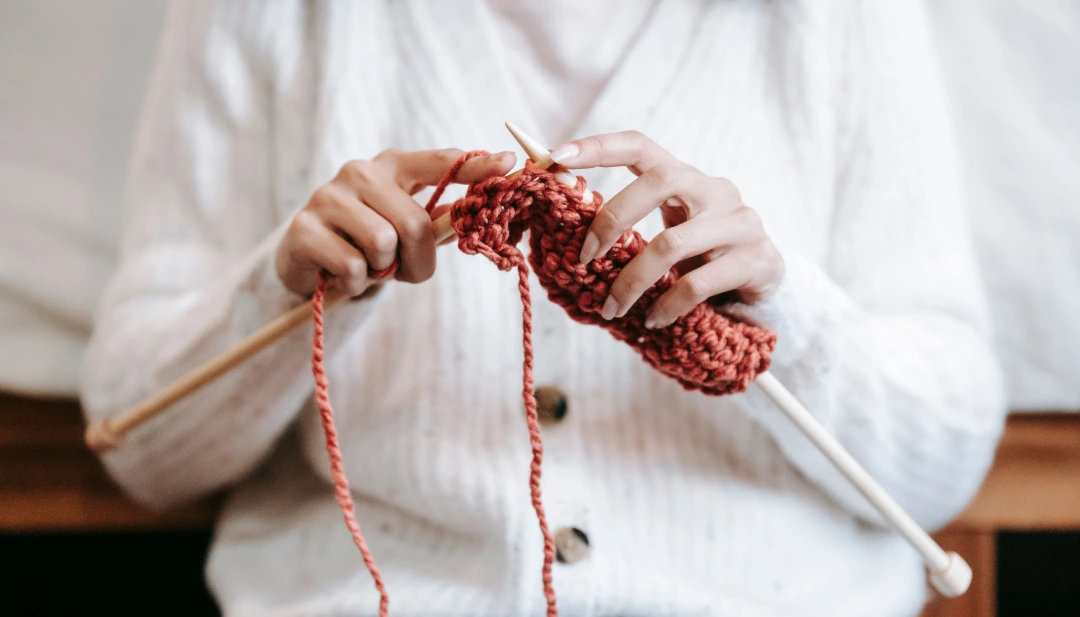
Before starting any project, you need the basic materials: crochet needles of different sizes, crochet yarn in varied colors, and scissors. Most applications offer specific recommendations on the optimal needle size for each type of yarn, and this information is crucial because the correct combination affects the entire texture and final result of your work.To start from scratch, invest in an economical basic kit with varying needle sizes, which allows you to experiment without much spending.
Wire is also important to choose correctly, and the applications help in this decision. For beginners, it is recommended to use medium-thickness wire in light colors, such as white or pastel shades, because you can see the points clearly, and if you get it wrong, it is easier to correct. Avoid very thin or very dark wires at the beginning, as this makes it difficult to visualize the structure of the point. In addition, have at hand a dot marker (which can be a button or a small chain) to help count your rows accurately, especially when you are starting.
Tips for Not Giving Up at the Beginning
The initial phase of any new learning is challenging, and crochet is no different. Your first points will probably not be perfect, and this is completely normal. The key is to accept that imperfection is part of the process and not abandon it out of frustration. Many beginners expect to make perfect points from the first try, but the reality is that you need hundreds of points practiced before your hand develops the necessary muscle memory.
An effective strategy is to establish a small and consistent routine instead of long, spaced sessions. Dedicating 15 minutes daily is much more productive than trying to study an hour once a week because it keeps your hand trained and your mind engaged with learning. Many apps allow you to set daily reminders, which helps create this habit. Also, look for communities in the app or on social networks where beginners share their progress, because seeing other people in the same challenges that make the process less lonely and more motivating.
The application in question offers specific features to support beginners during this critical phase. With interactive features and an environment designed for progressive learning, you have everything you need to overcome the first obstacles and gain confidence with each practice session.
Common Mistakes of Who Begins
One of the most frequent mistakes among beginners is too tightening the points, which creates a very rigid and uncomfortable piece of work. Many people get nervous practicing for the first time and contract the muscles of the hands unconsciously, transferring this tension to the wire. The solution is to breathe deeply during practice and remember that crochet should be relaxing, not stressful. The applications usually mention this in the first tutorials, but it is important to return to this tip whenever you notice your piece getting too tight.
Another common mistake is trying to move too fast, skipping important steps of progression. Some beginners want to soon do a complete project without mastering the individual points first, and this results in poorly made pieces that do not motivate. Resist the temptation to skip steps, even if they seem too easy. Each basic point is the foundation for more sophisticated techniques, and skipping this base results in greater frustrations later. The applications structure learning exactly to avoid this problem, so follow the proposed path even if you feel like jumping ahead.
A third mistake is to give up when the thread pockets or your point falls apart. These situations are frustratingly common among beginners, and many people abandon it for thinking they were not born for crochet. Actually, these difficulties disappear with consistent practice. Apps include troubleshooting sections and tutorials on how to fix mistakes, so use these resources instead of abandoning when something goes wrong. Each mistake is a learning opportunity, not a sign that you can’t.
Next Steps After Mastering the Basics
After practicing the fundamental points and gaining confidence, the time has come to start your first real projects. Most applications offer projects for beginners that take a few hours to complete, such as a dishcloth, a decorative ribbon or a simple scarf. These first projects are psychologically important because they turn your abstract practice into something tangible that you have created with your own hands. Choose a project that you really use and enjoy, because this increases the motivation to finish.
As you complete initial projects, the application naturally guides you to intermediate techniques such as color changes, spiral work and more complex shapes. At this stage, you will discover your favorite points and design styles that please you the most. Some prefer amigurumi (small three-dimensional pieces), others like blankets and clothes, and there are those who fall in love with decorative pieces. The beauty of learning by the application is to have access to a huge variety of options to explore your preferences without pressure.
When you feel confident with the knowledge you have gained, consider expanding your learning by seeking specialized techniques within the app. Many apps offer advanced modules on specific techniques, and you will have the solid foundation you need to absorb them without difficulty. In parallel, start creating your own designs by adapting existing patterns or experimenting with colors and variations. This transition from pattern follower to creator is the point where crochet truly becomes your personal passion, transforming from structured learning into genuine creative expression.