How to Calculate the Exact Weight of Pigs and Sheep in Seconds
Announcements
Knowing the exact weight of your animals is essential for modern livestock, whether for commercial purposes, proper nutrition or health monitoring. You no longer need an expensive industrial scale to get this information: it is fully possible to calculate the weight of oxen, pigs and sheep using only simple body measurements.
This article unravels the most common mistakes ranchers make when estimating the weight of animals and presents the most reliable methods based on proven mathematical formulas. You will learn how to use these techniques in just a few minutes, transforming your herd management with accurate and accessible data.
Why Calculating Weight Without a Balance Is Fundamental
Most farmers do not have access to large digital scales or consider investment impractical for small and medium-sized properties. When you calculate weight by body data, you eliminate this dependence and gain agility in everyday decisions about food, medication and marketing. This practice is so reliable that veterinarians and zootechnicians often recommend it in the field.
Announcements
In addition, knowing the approximate weight allows you to adjust the amount of feed more precisely, reducing waste and improving the economic result of production. Properly fed animals gain weight more consistently, reach slaughter at the right time and have better carcass quality. The method is fast: you use a common tape and apply a simple formula, taking less than five minutes per animal.
Common Error: Using Uncertain Measures or Wrong Reference Points
The biggest mistake you can make when calculating animal weight is choosing inappropriate measurement points or performing measurements inaccurately. Many ranchers measure the thoracic perimeter misalignedly, taking measurements at incorrect angles, which completely distorts the final result. When the tape does not get perpendicular to the animal’s body or when the animal is not in correct posture, the value obtained can vary by 10% to 20% of the actual weight.
 Animal Weight – Pigs and Cattle
Classification:
^^^^^^^^^^^^^^^^^^^^^^^”’
3.75
Age Classification:
Free Classification
Author:
HorDev
Platform:
Android
Price:
Free
▶Download on Google Play
Another frequent mistake is to confuse the exact location of the body measurements that each formula requires. For example, for oxen, the chest girth should be taken right after the withers, not at any point of the chest. For pigs, you need two specific measures: the abdominal girth and body length, and each has a precise location. If you mix these references, the calculation is completely wrong, and you can make mistaken decisions based on false data.
Method to Calculate the Weight of Oxis Accurately
To calculate the weight of an ox using only a tape measure, you need to take two fundamental measures: the thoracic perimeter and the length of the body. The thoracic perimeter is measured immediately behind the shoulder blades, bypassing the thorax of the animal perpendicular to its length, ensuring that the tape is very tight but not compressive. The length of the body is measured from the tip of the shoulder to the tip of the buttock, in a straight line, using as reference the lateral of the animal.
After obtaining these two measurements in centimeters, you apply the formula: Weight (kg) = (Thoracic Perimeter² × Body Length) ÷ 10,800. This calculation provides a very close estimate of the actual weight, with a margin of error usually less than 5% when the measurements are correct. Suppose a Nellore ox has a thoracic perimeter of 180 centimeters and a length of 160 centimeters: the calculation would be (180² × 160) ÷ 10,800 = 32,400 × 160 80 0 0 00 = 160).
A very common mistake at this point is not to keep the animal in neutral posture during the measurement. The ox must be standing, with all four legs well supported on the floor, not tilted to any side and not stretching the neck forward or backward. If the animal is stressed or in an abnormal position, the measurements change. Therefore, it is recommended to take measurements at times of less movement, such as in the early morning or late afternoon, when the animals are calmer and in a natural position.
Calculating Pork Weight Through Body Measurements
For pigs, the method varies significantly because the conformation of the body is different from that of oxen. You need to take two main measures: the abdominal perimeter (measured at the widest part of the abdomen, just behind the ribs) and the length of the body (measured from the base of the ears to the beginning of the tail, straight). These two measures, when well performed, allow you to estimate the weight with good accuracy through the formula: Weight (kg) = (Abdominal × Length) ÷ 10,400.
Suppose a pig with abdominal perimeter of 100 centimeters and length of 70 centimeters. Applying the formula: (100² × 70) ÷ 10,400 = (10,000 × 70) ÷ 10,400 = approximately 67 kilograms. This estimate is reliable for growing pigs and for adult breeders, maintaining acceptable margin of error when measurements are taken correctly. The great differential with pigs is that they have greater variation depending on the breed and the feed, so regular monitoring of the estimated weight allows to identify when the animal is out of the expected for its age.
A very serious mistake that many producers make is to try to measure pigs in motion or when they are eating. The animal must be calm, standing, with the abdomen relaxed and all the legs supported equally on the ground. If the pig contracts the abdomen or stretches the body too much, the measure is completely compromised. In addition, the abdominal perimeter must be taken exactly in the region of greater width, and it is common for beginners to err at this point, measuring too far forward or too far back, which generates discrepant results.
Precise Technique for Measuring Sheep and Sheep Weight
Sheep and sheep present different challenge because they are smaller animals and their conformation varies greatly between breeds. For these animals, the most used measures are the thoracic perimeter (taken immediately behind the shoulder blades, in the same way as in oxen) and the body length (from the point of the shoulder to the tip of the buttock). The applicable formula is: Weight (kg) = (Toracic Perimeter² × Length) ÷ 11,000, being somewhat different from that of oxen because the coefficient fits the body structure distinct from the sheep.
Imagine a sheep with a thoracic perimeter of 110 centimeters and a length of 90 centimeters. The calculation results in: (110² × 90) ÷ 11,000 = (12,100 × 90) ÷ 11,000 = approximately 99 kilograms if it is a large sheep, or proportionally smaller if it is a smaller sheep. This same formula works well for both beef sheep and milk sheep, provided that the measurements are accurate. The margin of error is usually between 3% and 7%, which is suitable for most handling situations.
The most frequent mistake with sheep is not to stabilize the animal well to make the measurements, since these animals are more restless than oxen and pigs. You need to keep the sheep firm, with the help of another person if necessary, ensuring that it does not move during the measurement. In addition, the sheep fleece can compromise the accuracy of the measurement of the thoracic perimeter if the tape does not penetrate well between the wool threads: in recently sheared sheep, the measurements are more reliable than in sheep with long fleece.
Necessary Equipment and How to Use the Tread Properly
You do not need sophisticated tools to perform these measurements with excellence. A fiberglass or steel tape measure, of a minimum size of 3 to 5 meters, is enough for most cases. Cloth lathes are not recommended because they tend to stretch over time, affecting the accuracy of measurements. If you are going to measure many animals regularly, invest in a digital tape or a good quality metal tape, which will last for years without losing accuracy.
When using the tape, you should ensure that it is well positioned, perpendicular to the animal’s body, and adjusted without excessively compressing the skin or the fleece. The tape should not be so loose that it leaves space, nor so tight that it deforms the animal’s body or prevents it from breathing normally. This is a matter of sensitivity and practice: with some measurements, you develop the ability to judge the correct tension. It is recommended to take the measurement of the chest perimeter after exhaling the animal or at a time of normal breathing, not in deep inspiration, as this would also affect the result.
Another essential aspect is keeping records of these measurements over time. When you write down the girth and length of each animal on regular dates (for example, monthly), you can track the actual growth of the herd, identify animals that are not gaining weight properly and adjust the feeding in a preventive way. This registration practice has become a competitive differential for many producers, as it provides concrete data for decision making instead of assumptions.
Factors Affecting Accuracy of Weight Calculation
Even correctly following the formulas and measurement techniques, there are biological and situational factors that can affect the accuracy of the result. The first of them is the filling state of the gastrointestinal tract: an animal that has just drunk water or eaten bulky will have slightly increased abdominal and thoracic girth compared to the same animal measured in fasting. This difference can vary between 2% and 5% of the estimated weight, depending on how much the animal has recently consumed.
Race and genetics also influence the reliability of the calculation, because different genetic lineages have different body conformations.A Brahman ox has different bone structure than a Nellore, affecting the relationship between measurements and weight.For very specialized breeds or complex crosses, sometimes you find greater variation in the results. In this case, it is recommended to do some real weighings to adjust the formula and calibrate it specifically for your animals.
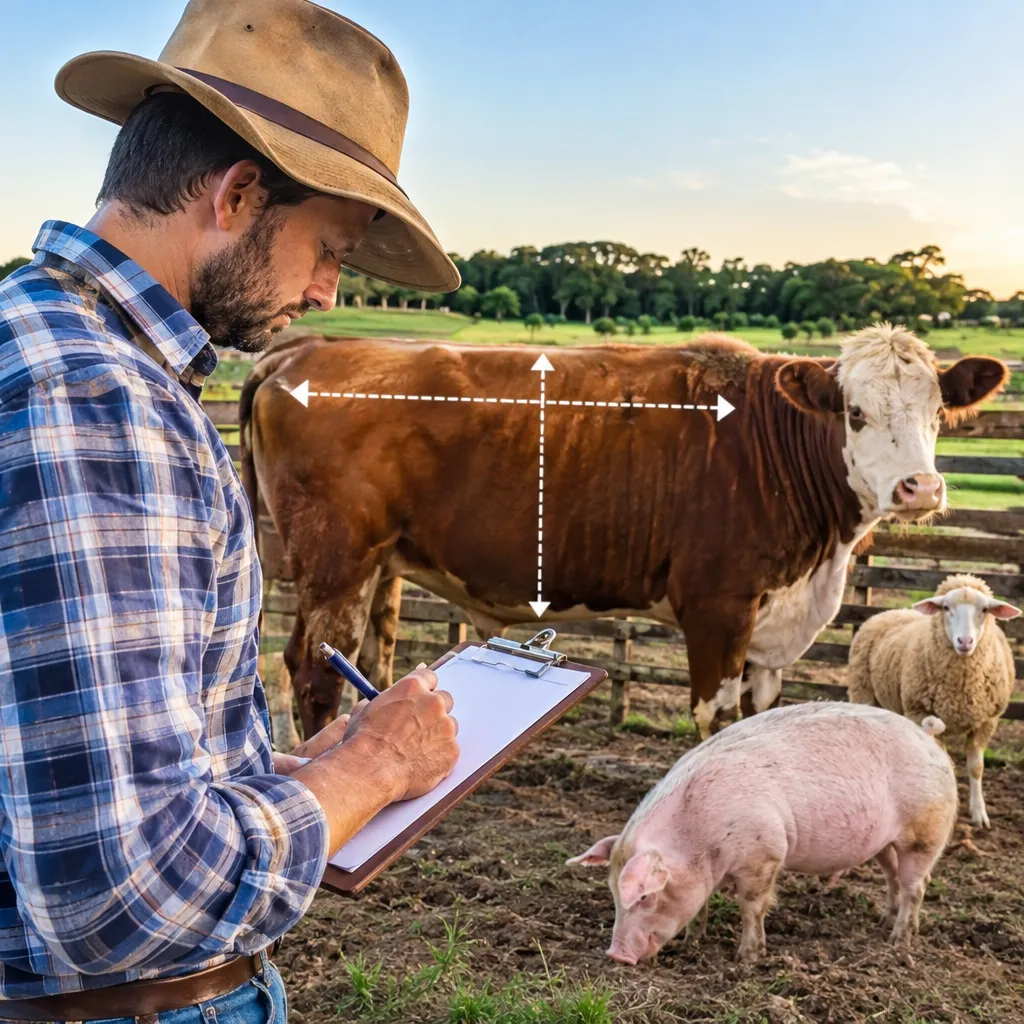
The body state of the animal also matters: a very muscular animal may have a higher weight than expected by the standard formula, while an obese animal (with excessive fat deposition) may result in overestimation.If you work with different categories of animals (growing calves, adult cows, breeding bulls), it is prudent to take measures on some animals of each category and compare with actual weighing when possible, to validate the method in their specific conditions.
Step-by-Step Measuring Without Errors: A Practical Protocol
Establish a standard protocol that you follow every time you measure an animal, eliminating unnecessary variations. First, choose a quiet place where the animal can stand naturally, without obstacles or stimuli that frighten it. If possible, use the same place regularly so that the animals get used to it and become calmer. Make sure that the tape measure is in good condition, clean and working properly before you start.
Second, position the animal correctly: standing, with four legs well supported, equidistant from each other, and the body straight. For oxen, sheep and sheep, start taking the thoracic perimeter right after the shoulder blades, making sure that the tapeworm contours the body symmetrically. Pass under the animal on one side, contouring the chest, and return on the other side. The tape should be parallel to the ground, not inclined.
Third, write down this first measurement before moving on to the next. Then take the length of the body, which you will measure from the tip of the shoulder to the tip of the buttock (for oxen and sheep) or from the base of the ears to the base of the tail (for pigs), always straight down the side of the animal. Keep the tape steady but without excessive tension. Write down this second measurement accurately.
Fourth, record the date, the animal identifier (name, earring number, registration number) and both measurements in a spreadsheet or management application. This creates a history that allows you to track weight gain over time. If your animals have specific characteristics (race, gender, approximate age), write this down also for future analysis and adjustments to formulas if necessary.
Validation and Comparison With Real Weights
The most reliable way to validate if your method is working well is to compare the calculated weights with actual weighings whenever you have the opportunity. If you take some animals to the slaughterhouse or for a commercial transaction, take the time to weigh them before leaving the property and write down the actual result. Then compare with the weight you had calculated using the body measurements: if the difference is between 3% and 7%, your method is excellent and properly calibrated.
If the differences are greater, investigate why. It may be that your measurements are inaccurate, or that the standard formula is not well adapted to your specific animals. Some more advanced producers adjust the coefficient of the formulas (the divider: 10,800 for oxen, 10,400 for pigs, 11,000 for sheep) based on their own multi-animal validations. This significantly improves the accuracy of future calculations.
Perform validations regularly, especially when introducing new breeds, genetics or lots of animals into the herd. Over time, you will have full confidence in the method and can make quick decisions based on the calculated weight, knowing that the result is reliable in your specific operating conditions.
Practical Application: Two Mistakes That Cost Expensive In Livestock
A very expensive mistake is to underestimate the weight of animals and, as a result, provide insufficient amount of feed or nutritional supplements. When you calculate incorrectly because the measurements were inaccurate, you can leave your animals malnourished without realizing it. An ox that should receive 8 kilograms of concentrate per day, if you estimated its weight 20% below the actual, you will receive only 6.4 kilograms, negatively impacting weight gain and the time until slaughter. This results in financial losses that accumulate over months.
The other costly mistake is to overestimate the weight and offer excessive feeding, unnecessarily increasing the cost of production. If you calculate that a pig weighs 100 kilograms when it actually weighs 80, it will provide 20% more feed than necessary, wasting resources and reducing the profit margin. Both errors are born from inadequate measurements or poorly applied formulas, which makes training and protocol standardization absolutely critical to the profitability of your livestock business.
Maintaining the Consistency and Traceability of Measurements
Implement a simple registration system that you can maintain regularly without it becoming a burdensome task. A spreadsheet on the computer, an organized notebook or even a mobile application works: the important thing is that it is consistent. Record not only the measurements and the calculated weight, but also the date, the approximate time (morning or afternoon), the state of the animal’s feeding (whether it was fasting or after feeding) and any relevant observation about the health or behavior of the animal at that time.
This traceability allows you to identify patterns over time: which season of the year each animal gains weight the fastest, how the feed offered affects the gain, whether there are chronic health problems reducing growth, and other valuable insights. With a few months of consistent data, you will have a factual basis for making decisions about feeding, breeding, disposal and marketing. This data-driven knowledge is exactly what separates the most profitable growers of any size from those who only react to the problems.
In addition, in the case of commercial transactions, having historical records of the weight calculated regularly provides credibility and technical basis for negotiations. Buyers and veterinarians respect producers who work with concrete and proven data, not with vague estimates. This simple but disciplined practice positions you as a serious professional in livestock.
Adaptations for Different Circumstances and Categories Animals
Growing calves, heifers, adult cows and breeding bulls have distinct conformations and may result in variations in the application of the formulas. For smaller calves (less than 100 kilograms), consider using the same method but note if the discrepancies are larger than normal, which could indicate that the standard formula does not suit very young animals well. Some producers use slightly modified formulas for calves, increasing the divider by 500 to 1000 units depending on size.
For adult females (milk or beef cows that have already calved), body shape can vary greatly depending on the number of calves and nutritional status.If a cow is visibly lean, the calculated weight may overestimate the actual; if it is too fat, it may underestimate. In these situations, it is even more important to validate the method with actual weights periodically and, if necessary, make adjustments to the formulas specific to its animal categories.
For breeding bulls and sheep, which usually have very developed musculature, the calculated weight may be slightly lower than the actual one because these animals have higher muscle density. If you work with breeders, take time to do some comparative weighing and, if necessary, reduce the divider by 500 units for better approximation. The investment of time in these initial validations saves repetitive errors throughout the life of the protocol.
Using Weight Information for Strategic Management Decisions
Knowing the exact or well-estimated weight of your animals turns data into opportunities for improved management. If you identify that a batch of calves is gaining only 500 grams per day when it should gain 800 grams, you can review the feed, investigate parasites or health problems immediately, instead of finding out only in slaughter that there was a loss of yield. This preventive intervention, based on weight data, saves time and resources significantly.
Similarly, by monitoring the regular weight of the mothers (cows and sheep), you identify which individuals are losing body condition, signaling possible health problem, nutritional deficiency or parasitosis. This allows corrective action before the problem becomes critical and compromises reproduction or milk production. Producers who do this monitoring regularly can keep their herds healthier and more productive with less use of medicines.
In marketing, when you take animals for sale or slaughter, you already know with reasonable accuracy what the final weight will be and can negotiate with confidence, no surprises. This avoids surprise discounts on the refrigerator and improves the profit margin per animal. In addition, if a buyer questions the weight informed, you have records that prove the progressive weight gain, giving credibility to your information and position in negotiations.