Want to Learn to Play Piano? Use an App
Announcements
Learning to play the piano has never been as accessible as it is today. With a good application, you can master the basic techniques of the instrument without having to leave home or invest in expensive classes.
Technology has put powerful tools in the hands of anyone who wants to start this musical journey.You can study at your own pace, repeat lessons as many times as you need and track your progress in a clear and motivating way.
Why Use an App to Learn Piano
The applications specialized in piano teaching offer an organized and progressive structure that facilitates learning from day one. Unlike videos released on YouTube or disorganized tutorials, these apps present the contents in logical sequence, respecting the absorption time of each user. You learn theory, typing technique and musical practice in an integrated way.
Announcements
Flexibility is another great differential that you find in this type of tool. You can study five minutes or an hour, in the morning or in the evening, on weekends or between appointments. There are no fixed schedules, teachers waiting for your arrival or rigid schedules to comply. This means that you have full autonomy to adapt learning to your personal and professional routine.
Many of these apps are also free or offer quality freemium versions, removing the financial barrier that once kept many people from getting started.The democratization of access to music education through apps has made it possible for anyone, regardless of their social class, to access high-quality content produced by experienced teachers.
Essential Checklist for Choosing the Best Piano App
Before downloading any application, you need to check some fundamental criteria that ensure an efficient and enjoyable learning experience. This checklist will help you not waste time with inappropriate tools or that do not meet your real needs.
Progressive Learning Structure: Confirm that the app starts from absolutely zero, without assuming prior musical knowledge. Check that the lessons are organized in modules that gradually increase in difficulty. You should be able to follow a clear path from beginner to an intermediate or advanced level, depending on your goals.
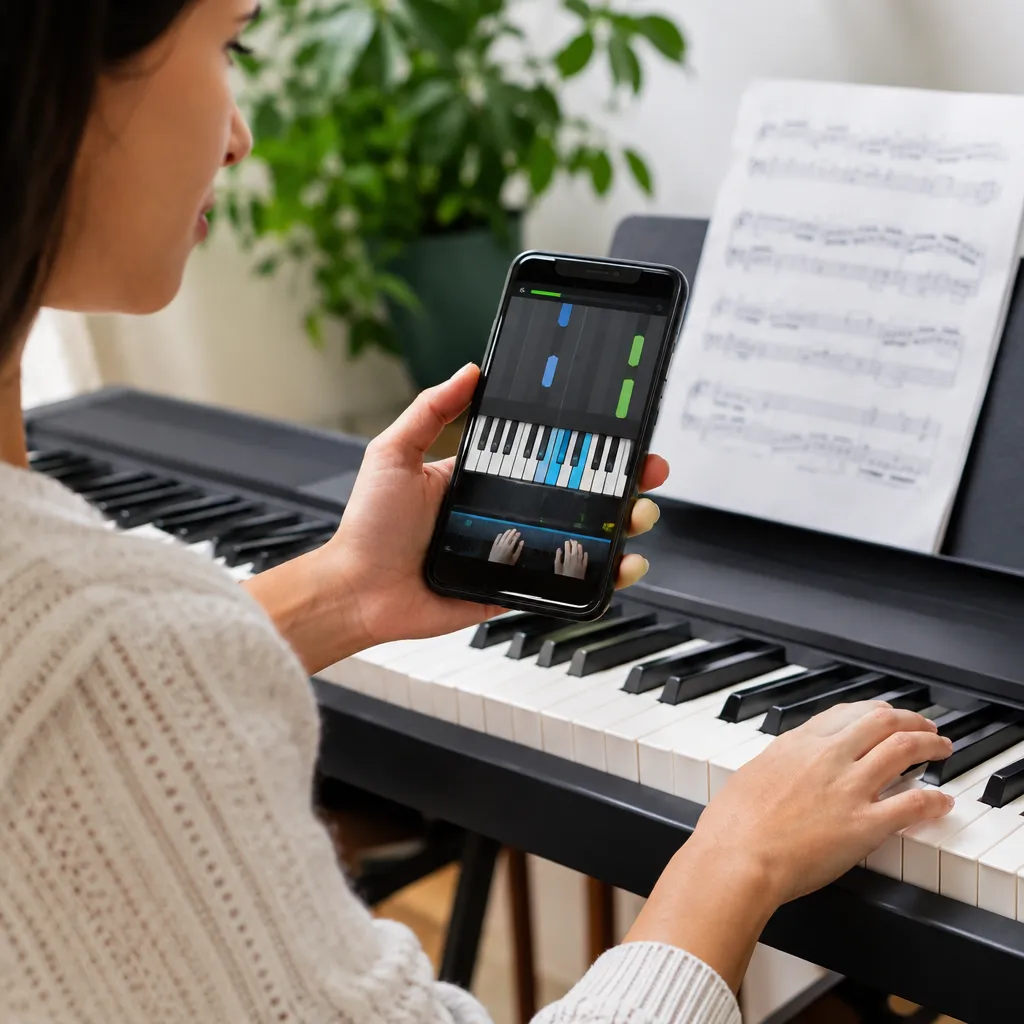
Audio Quality and Visual Feedback: Test if the piano sounds played in the app are realistic and clear. Look for apps that visually show which keys you should press, with colors and animations that help you understand the correct position of your hands on the keyboard.
Offline Availability: Make sure you can access classes without an internet connection.Many apps allow you to download content, which is essential if you travel, are in places with poor connection or simply want to study without digital distractions.
Practical Exercises and Repertoire: Look for apps that include interactive exercises where you play along with the lessons, not just watch. Confirm that there is an interesting repertoire of songs you would like to learn, from classics to modern songs or famous soundtracks.
Progression and Gamification System: Evaluate whether the app offers badges, points, streaks or other forms of recognition that motivate you to keep practicing. A clear progression system, where you see exactly how far you have advanced, is crucial to maintaining motivation over the months.
Friendly Interface and Support: Make sure the app is intuitive and does not require reading complex manuals. Check for customer support, whether through chat, email or FAQ, for when you have questions or face technical problems.
Compatibility with Your Device: Confirm that the app works perfectly on your smartphone, tablet or computer. Some apps work better on iOS, others on Android, and some have web versions. Choose one that integrates well with your device ecosystem.
External Keyboard Connection Options: If you already have a MIDI keyboard or digital piano, look for an app that allows you to connect via Bluetooth or USB. This connection offers a much more realistic and professional experience than just touching the screen of the phone.
Key Features of Best Piano Apps
The best piano learning apps share some common characteristics that set them apart from mediocre tools.They combine solid pedagogy with modern technology, creating experiences that keep you engaged and progressing consistently.
A crucial aspect is adapting the content to your level and speed of learning. Smart apps analyze your responses to exercises and automatically adjust the difficulty of the next lessons.If you are having ease, increase the challenge; if you are having difficulties, offer more practice on that specific topic before moving forward.
Real-time audio recognition is another feature that separates professional apps from amateur ones. This technology detects whether you have pressed the correct key at the correct time and with the appropriate intensity.You receive immediate feedback on your performance, which speeds up error correction and solidifies learning.
Getting Started with Learning: First Weeks
Your first few weeks with a piano app should focus on familiarization and routine. You don’t have to study hours every day; 15 to 20 minutes of consistent practice, five or six days a week, already produce significant results.
Start by learning how to identify notes on the keyboard and how to read basic sheet music.Most apps offer this foundation through interactive games that make the process fun. Then practice the correct hand position and simple scale exercises that develop coordination and muscle memory.
Don’t compare your progress to that of others using the same app.Each individual has a different pace of learning, and pushing the pace beyond their current capabilities leads to frustration and abandonment.Respect your own pace, celebrate small achievements, and stay consistent.
Practical Tips to Maximize Your Learning
For the best results with the app you choose, you should follow some practices that have been proven to accelerate music learning.These tips come from experienced educators and musicians who understand how the brain processes musical information.
Practice the same lessons multiple times before moving forward.Repetition builds muscle memory and consolidates knowledge in the long run. Do not advance just because you managed to do it once; completely master each concept before proceeding to the next.
Establish a dedicated space to practice where you can focus without distractions. Turn off notifications, put your phone on silent mode and communicate your study routine to people nearby to avoid interruptions.A focused environment dramatically increases the quality of every minute of practice.
Record your progress in a journal or use the reports that the app provides. Visually track how many exercises you have completed, how many songs you have learned and how much time you have invested reinforces motivation and helps you identify patterns of difficulty.
Try to listen to a lot of piano music while you are not practicing. This passive exposure to the sound of the instrument trains your ear and familiarizes you with different styles and composers.When you later play those same songs in the app, the learning process is facilitated because you already know the melody.
Conclusions About Learning Piano With Apps
Modern applications have completely democratized access to quality music education.You do not need an expensive private teacher, a music school or an acoustic piano of seven thousand reais to start your journey as a pianist. A smartphone and a good app are enough for you to seriously learn the fundamental techniques of the instrument.
The key to success lies in choosing a suitable tool (following the checklist presented), maintaining consistency in practice and respecting your own learning pace. Combining these three things ensures that you will progress safely and satisfactorily. Thousands of people have already started their musical journey this way, and you can also do the same starting today.