Anonymous messaging app with single view for Android
Announcements
Do you want to send messages without revealing your identity and make sure they disappear after being read? Single view anonymous messaging apps transform the way you communicate privately on Android.There are several free options available that combine total anonymity with data security.
Choosing between the different solutions can be confusing, especially when so many apps promise absolute privacy.This article compares the best alternatives in a practical and objective way, helping you identify which tool really meets your needs for discreet communication on Android.
What are anonymous messaging apps with single view
Single view anonymous messages act as a temporary communication system where the sender does not need to identify himself and the message disappears after being opened one or more times. You send the text, photo or audio without leaving identity traces, and the recipient sees the content only once before it self-destructs. This working model provides security for sensitive conversations and maintains the privacy of those involved.
Announcements
Unlike traditional messaging apps that store histories and allow unlimited screenshots, these platforms implement end-to-end encryption and automatic destruction protocols.You can share sensitive information knowing that it will be permanently deleted after reading, reducing data leakage risks.Additional anonymity prevents the person from identifying who sent the message, creating a secure space for sensitive communications.
Why use an anonymous messaging app with single view
Privacy has become a fundamental right in the digital age, and you may have legitimate reasons to seek anonymity in your communications. Human resources professionals often receive anonymous feedback from employees, journalists need confidential sources, and people in vulnerable situations need secure channels to report problems without reprisal.
 WhatsApp Messenger
Classification:
”’I think it’S.
4.71
Age Classification:
Classification 14 years
Author:
WhatsApp LLC
Platform:
Android
Price:
Free
▶Download on Google Play
In addition, single-view messages work as a mechanism against the improper sharing of personal content.You prevent screenshots or prints from perpetuating sensitive conversations on social networks or message groups.Automatic destruction ensures that temporary information does not occupy permanent space in anyone’s digital memory, offering full control over your personal data and your digital footprint.
Comparing the top free options for Android
When searching for a free anonymous messaging app for Android, you find dozens of options, but not all offer the same encryption quality and user-friendly interface.The most reliable platforms combine open source or external auditing, an active community of users and really functional privacy features. Comparing these solutions means analyzing technical aspects such as security, usability, speed and limitations of use.
Signal Private Messenger stands out as one of the most recommended options by digital security experts worldwide. The application offers end-to-end encrypted messages, secure video calls and completely free private groups. For single-view messages, you can enable the “Messages that disappear” feature in any conversation by setting destruction deadlines ranging from 5 seconds to 1 week. Signal does not store user data on its servers and its code is open for public auditing, making it a reliable choice for those who prioritize real security rather than just promises.
Telegram offers a different approach with secret rooms and self-destructive messages, but it maintains centralized servers that can store metadata of your communication. The application allows you to set up end-to-end encrypted secret chats with adjustable message destruction timers. You can use public channels and groups without revealing your true identity, creating a layer of anonymity depending on how you set up your account. The interface is intuitive and the application offers extra features like stickers and games, but security depends heavily on your configuration choices.
Dust, also known as Dust by Cyber Dust, is specifically designed for messages that self-destruct on Android and iOS devices. The app offers military-grade encryption, instant screenshot notifications, and the ability to burn messages before they are even read. You send a message and it disappears at a set time or immediately after reading, with automatic warning if someone tries to capture the screen. The platform does not store messages on servers, keeping everything processed locally on your device.
Wickr Me works as a secure messenger with full focus on privacy, offering automatic message destruction, metadata cleaning and notifications of possible screenshot attempts. You create an account without the need for a verified phone number or email, ensuring anonymity from the beginning. The application allows you to send messages, photos, audio and even files with password protection, and all disappear permanently after expiration. Wickr Me is completely free on Android and contains no advertising, offering clean and focused experience in secure communication.
Wire offers end-to-end encryption for text messages, voice and video calls, with the option of automatic message destruction in individual conversations.The application allows you to create an account with username instead of phone number, offering flexibility for anonymity. Wire is developed by a Swiss company regulated by strict privacy laws, and offers free and premium versions, and the free version already includes all the essential security features.
How to choose the best option for your needs
Your choice of the best anonymous messaging app depends on specific factors like the type of communication you plan to do and the level of anonymity you need. If you are looking for a solution that offers maximum security with ease of use, Signal is the most solid recommendation because it offers audited trust and is recommended by human rights organizations.If you need an application with a more complete interface and additional features, Telegram works well but requires careful configuration of privacy options.
For those seeking maximum privacy with a specific focus on message destruction, Dust and Wickr Me stand out because they were developed with this goal in mind. Dust offers screenshot notifications and modern interface, while Wickr Me provides a more established and reliable experience with metadata cleaning feature. If you already use applications of a specific brand and want integration within an existing ecosystem, Wire works well because it offers all the features on a single platform.
Also consider compatibility with your contacts and the ease of inviting others to use the same application. Some apps have greater adoption in certain communities, which makes the experience more practical. Signal and Telegram have larger user bases, making it easier for you to invite familiar people. Wickr Me and Dust are more specialized, requiring more effort to get your contacts to download the application, but offering a more privacy-focused community.
Security features you should check
When evaluating an anonymous messaging application, you should check that it offers proven end-to-end encryption and not just generic security promises. Apps that use recognized protocols like Signal Protocol or third-party audited encryption standards offer more confidence than proprietary solutions.Make sure the source code is available for public audit or that the application has undergone independent security assessments conducted by recognized experts.
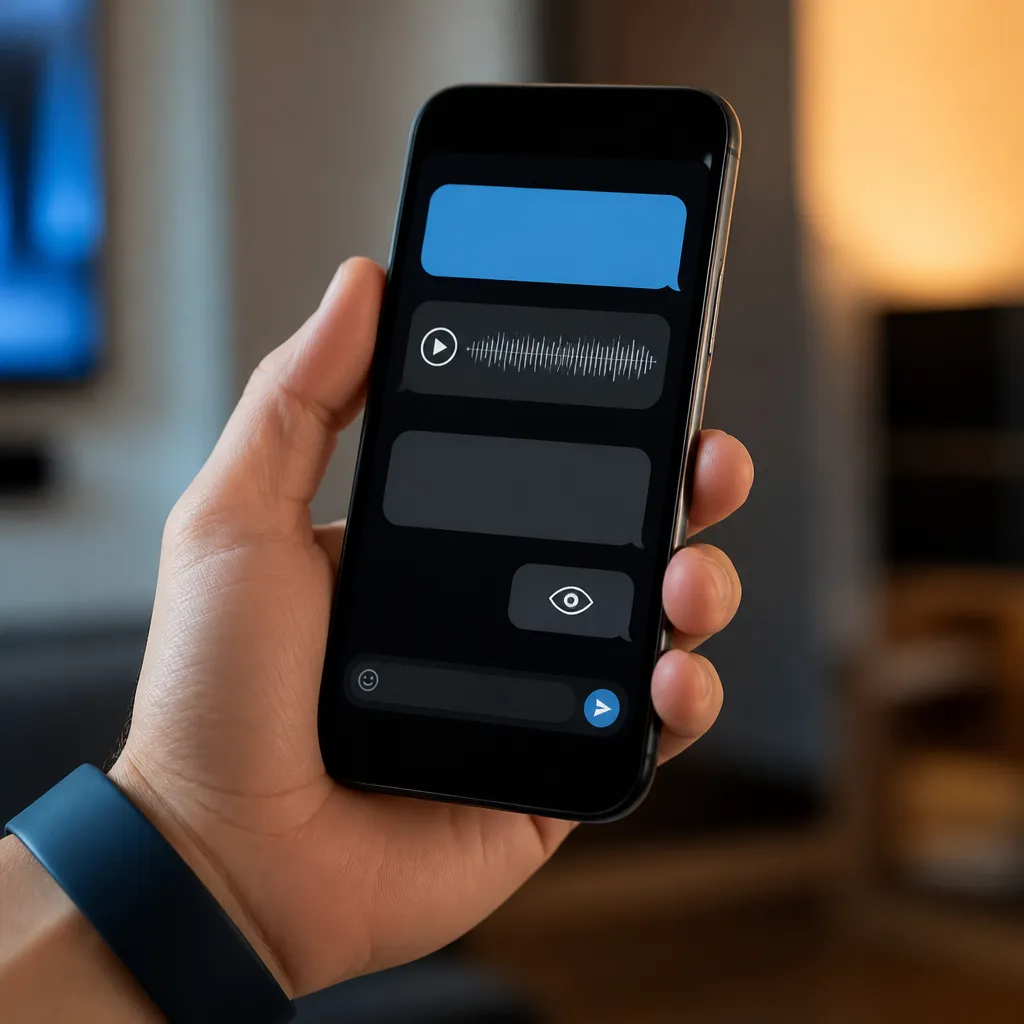
The automatic message destruction feature should be really irreversible and not just hide the contents of the view.You want to ensure that deleted data cannot be recovered from cloud backups or through device forensic analysis.Some apps offer metadata cleaning that removes information about date, time and location of messages, adding another layer of privacy. Screenshot notifications or screen recording are also important features if you want to be alerted when someone tries to capture your messages.
Check the privacy policy of the application to understand exactly what data is collected and how it is stored. A truly anonymous application should not require your real phone number, verified email or legal name during registration.Search for information about the location of the servers where data is processed and the legal jurisdiction that governs the company.If the application is hosted in countries with strong data protection laws, it provides additional security against government surveillance.
Practical features and common limitations
You should understand that many anonymous messaging apps have deliberate limitations to maintain security, and these restrictions are features, not defects. For example, some apps do not allow you to back up messages in the cloud because storing encrypted copies online increases security risks. Single view means you cannot reread a message after it disappears, so jotting down important information before destruction is essential if you intend to save specific data.
Most free apps offer unlimited storage of messages while they are visible, but some limit the number of contacts or simultaneous conversations in the free version. Certain apps do not allow large groups or public channels, specifically focusing on one-to-one communication or small private groups. You may face file size limitations for sending media, particularly high-resolution photos and videos. Considering these restrictions, evaluate whether the chosen app works for your specific use cases.
Video and audio call quality varies significantly between applications, especially on unstable internet connections. Signal and Wire offer superior quality because they invest in optimized audio and video encoding infrastructure. Telegram often offers faster calls to connect, but can sacrifice quality on weak connections. Wickr Me and Dust prioritize security over call quality, being more suitable for urgent textual communication than for long audio conversations.
Practical tips to maximize anonymity and security
In addition to using a secure app, you should adopt practices that reinforce your anonymity and privacy during communication. Never reveal identifiable information in anonymous messages, such as your real name, workplace, phone number or any detail that may be connected to your identity. Even seemingly harmless information such as hobbies, family or friends can be used to identify you if the other person knows you well. Keep your messages generic and avoid very distinctive writing patterns that may reveal your identity.
Use a public Wi-Fi network or VPN when sending anonymous messages to add extra layer of location tracking protection through IP addresses. Your internet provider or mobile carrier may see that you are using a secure app, but a VPN masks even this metadata information. Consider disabling location on your device when using anonymous apps, as GPS data may be inadvertently included in metadata. Turn on screen lock with biometrics or strong password to protect the device in case of loss or theft.
Never reuse usernames or email addresses between different apps, as correlating identifiers can reveal that the same person is behind anonymous accounts. Create temporary email addresses when necessary if the app requires registration, using temporary email services that do not store data permanently. Regularly clear the cache and app data in Android settings to ensure that no sensitive information is stored locally. If you share the device with others, consider keeping anonymous apps in a separate Android profile or using guest mode for additional isolation.
Legal and ethical issues of anonymous messaging
You should understand that anonymity does not mean impunity, and anonymous communications are still subject to local and international law. Using an anonymous application to threaten, harass, extort, or harm others is illegal in virtually all jurisdictions, and investigations can track activity even through layers of encryption. Authorities with a court order can, in many cases, force platforms to cooperate or investigate connection metadata that reveal communication patterns.The illusion of perfect anonymity can lead people to crimes they think will not be discovered.
On the other hand, legitimate anonymity serves valuable purposes such as reporting corruption, sharing sensitive personal experiences, seeking stigma-free health guidance, and protected communication in authoritarian regimes.Many humanitarian, human rights, and journalistic organizations use anonymous applications as legitimate security tools.You can use these platforms ethically for private communication, honest feedback, and personal protection, provided that you do not cause harm to others and respect the laws of your country.
Privacy policies and anonymous app terms of service often restrict illegal and abusive uses, and serious platforms cooperate with legal investigations when necessary. If you need anonymity for legitimate reasons, choose reputable developer apps with a history of transparency and commitment to genuine privacy. Avoid platforms that promise absolute impunity or lack any oversight, as they are often focused on criminal activity and offer less real protection than fake security.
Trends and evolution of secure messaging apps
The anonymous messaging application market is rapidly evolving with new encryption technologies and privacy models.You will see growth in decentralized applications that do not rely on central servers, removing single points of failure and reducing opportunities for mass surveillance. Protocols such as Matrix and ActivityPub are gaining adoption, allowing you to choose between different applications that speak the same encryption language. Development of post-quantum encryption is also in progress to protect communications against future threats from quantum computers.
Government regulation is increasing around the world, with some countries seeking to limit or prohibit strong encryption under the counter-terrorism and crime argument. You may see increasing pressure for apps to implement backdoors or cooperate with surveillance, something serious privacy developers are actively resisting. New solutions are emerging that combine privacy with legal compliance, creating balance between fundamental privacy rights and legitimate public security needs.
Artificial intelligence is being integrated into messaging applications to detect spam, malware and abusive content without compromising end-to-end encryption.You can expect smarter features that protect privacy while maintaining platform security.Advanced biometric authentication and multi-factor authentication are becoming standard in serious applications, reducing risk of unauthorized access. The future of anonymous applications will likely involve more intuitive interfaces, greater interoperability between platforms, and clearer regulation of user and developer rights and responsibilities.