Virtual X ray app for Android: see through the clothes
Announcements
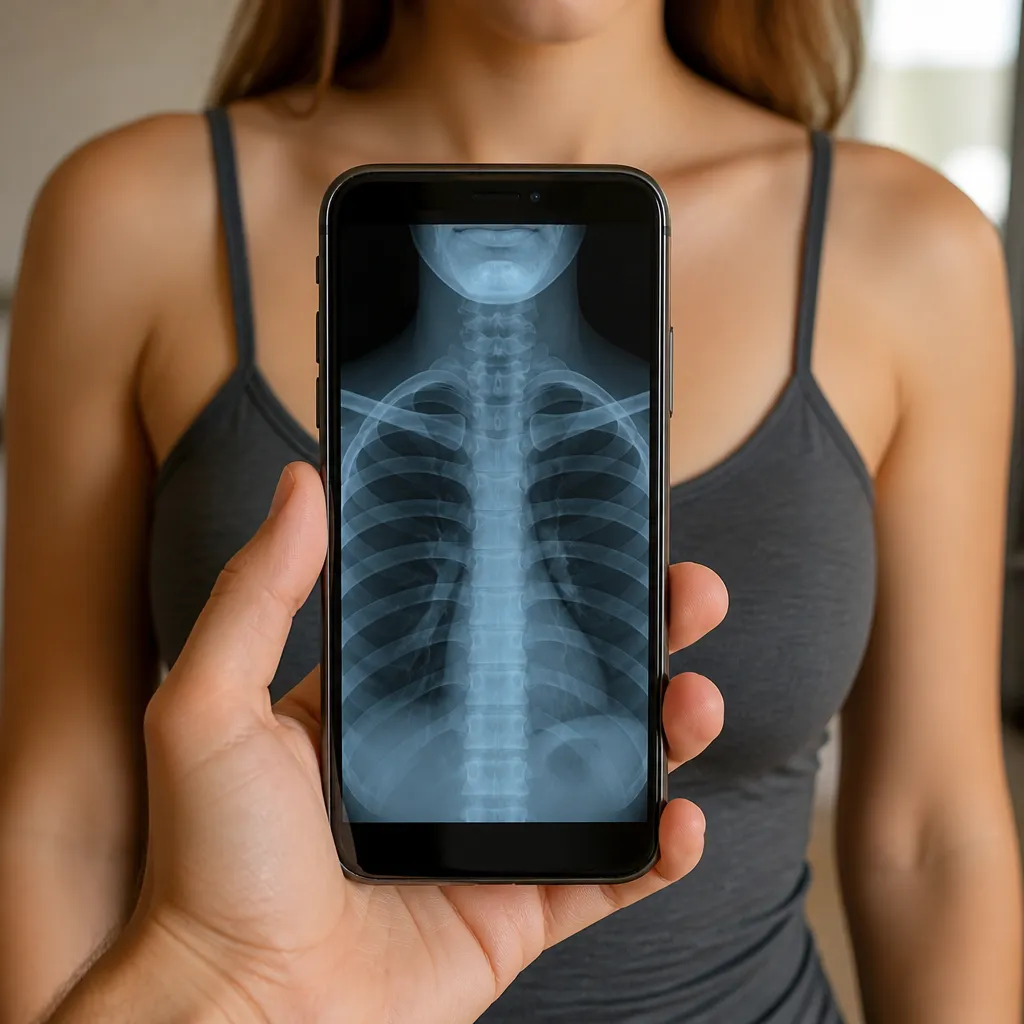
Have you ever wondered if it would be possible to use the camera of your Android phone to see through clothes? This is one of the most common searches on the internet, driven by curiosity and often misinformation.In this article, we will clarify what really works, what is just fiction and what are the most common mistakes people make when searching for this type of application.
The truth is that X ray technology does not work the way many imagine in the simulators available for download. The applications that promise to allow you to see through the clothes are, in the vast majority of cases, fake or work just as jokes. Understanding this reality is essential for you not to fall into security traps, privacy and even financial scams that circulate on the internet.
How X ray simulators work for Android
The virtual X ray applications you find in the app stores work in different ways than you might expect. Most of them use visual effects and camera filters to create an illusion that they are analyzing objects across surfaces.Some apps use image processing algorithms that modify the color, contrast, and saturation of the camera in real time to simulate an X ray effect.
Announcements
These simulators usually have two models: those that use only the front camera with filter effects and those that try to simulate infrared radiation. None of them can really see through clothes or solid objects, because the camera of your cell phone works with visible light, not with radiation capable of penetrating materials. What you are seeing is always a visual simulation, a real-time image editing trick that creates a false impression that something is being viewed through objects.
The confusion happens because many people believe that the infrared technology present in some premium phones can create this effect.In reality, the infrared sensor of some devices serves only for facial recognition and depth mapping, not to see through surfaces.The basic physics of infrared radiation simply does not allow this type of visualization effectively through clothing.
 Xray scan filter cam
Classification:
””^^^^^^^^^^^^^^^^^^
1.59
Age Classification:
Free Classification
Author:
rokdevapps
Platform:
Android
Price:
Free
▶Download on Google Play
The most common errors when searching for X ray applications
The first mistake most people make is believing that a simple application can do something that medical X ray technology itself, much more sophisticated and expensive, can only do with specialized equipment. Actual X ray devices cost tens of thousands of dollars, use highly dangerous ionizing radiation and require licensed professionals to operate. No free application on your mobile phone will replicate this technological complexity.
Another serious mistake is downloading applications from unreliable sources or from websites that promise impossible functionality. Many of these applications contain malware, adware or attempt to steal personal information from your device.When you install an application from an unofficial source or from an unknown developer that promises something clearly impossible, you are putting your privacy and security at risk. Curiosity can lead you to make decisions that harm your mobile phone and your personal data.
A third frequent mistake is to confuse X ray simulators with thermography or night vision applications.Some applications use the filter camera to create interesting visual effects, and people mistakenly believe that they are seeing body heat or real infrared radiation.In fact, these effects are just color and contrast modifications that create a visual illusion.True thermal vision requires specialized sensors that most cell phones do not have.
Why apps promise something impossible
The reason many developers create and distribute apps with impossible promises is simple: monetization through advertising and human curiosity. These apps make money from in-app ad clicks and downloads that feed the statistics of their app portfolio.When an app promises something as attractive as seeing through clothes, it automatically generates millions of downloads from curious people, even though it knows internally that the functionality does not exist.
Many of these simulators also work as subscription traps. After some limited uses, the application offers a “premium upgrade” that would supposedly unlock the full feature. You pay a recurring fee expecting improvements that will never come, maintaining a cycle of frustration and unnecessary spending of money. The strategy is to keep the user believing that maybe the next update or paid version will finally work.
There is also the sensationalist exposure factor in forums and social networks.When someone shares screenshots of an app that seems to work, even if it is just a compelling visual effect, the message spreads quickly.People share believing they have discovered something revolutionary, fueling a chain of misinformation that makes more and more people curious and willing to download these deceptive apps.
Security risks when installing X ray simulators
When you install an X ray app from a dubious source, you are literally giving permission for that app to access your camera, photo gallery, contacts, and potentially your location.Many of these malicious apps use these permissions to collect personal data, send spam, or even log your activities.
Another significant risk is malware infection. Apps downloaded from unofficial stores or from links shared on forums often contain malicious code that can damage your device, steal banking details or access to your social media accounts.You may think you are just testing a harmless prank, but in reality you are installing software that compromises the entire security of your device.
In addition, these apps often request excessive permissions that they would have no legitimate reason to need. A camera app that really just applied filters would not need access to your contacts or call history, but many of these simulators request all of this. This is a clear red flag that the app has intentions beyond what is advertised.
Legitimate and safe alternatives to exploit camera effects
If you are interested in camera apps that create interesting visual effects, there are safe and legitimate options available in the official app stores. Popular camera editing apps like Adobe Lightroom, Snapseed, and Prisma offer sophisticated filters that transform your photos in creative ways without compromising your security.
You can also explore augmented reality applications that use the camera to create 3D and interactive effects without making impossible promises. Apps like Google AR Core (used by various developers) allow you to see virtual objects in the real world through your mobile camera. These experiences are genuinely interesting and safe because they are developed by trusted companies and do not try to deceive you about their capabilities.
If you want to learn about how radiation and thermal imaging really work, there are documentaries, educational channels and even scientific simulators that explain these concepts correctly. You can find educational content that satisfies your curiosity without putting your device at risk. This approach offers real knowledge instead of false promises and misleading visual effects.
How to identify fraudulent applications before installing
The first step to avoid falling into traps is to check the app developer. Legitimate apps come from established developers with verifiable history, multiple publications in the app store, and a significant amount of active users.If the developer is unknown, has only one or two apps published or the profile looks suspicious, this is a warning sign. Search the name of the online developer to confirm that it exists as a real company.
Review reviews and comments with critical attention. Read negative reviews specifically to understand what are the most common complaints. If the application has a lot of reviews saying that it does not work, that it is just a visual simulator or that it charged unexpected fees, you already have enough information to make a better decision. Be wary of applications that have many five-star reviews accompanied by comments that contradict the main promise.
Check the permissions you requested before installing any app. Open the full app description and review exactly what permissions it is asking for. A camera simulator app should never ask for access to contacts, messages, call history, or banking information. If the permissions you requested do not make sense for the described app role, this is a clear indicator of bad intent.
The physical reality behind the X ray vision
For you to truly understand why these applications do not work as they promise, it is important to understand some basic principles of how X ray radiation actually works.X ray radiation is a form of electromagnetic radiation with very short wavelength, capable of penetrating many materials because its energy is high enough to pass through them. However, your cell phone’s camera works with visible light, which has much longer wavelength and cannot penetrate opaque objects.
Your cell phone’s camera captures visible light photons reflected or emitted by the things you shoot. This light is blocked by most materials, including clothing, as light simply cannot cross this kind of barrier.An application that only processes and modifies the image the camera has already captured cannot magically create information that does not exist.No matter how much image processing you do, you cannot extract data that was never captured in the first place.
Some applications try to argue that they use “infrared radiation”, but also here there is a problem. Although infrared radiation can penetrate some materials more than visible light, it is still blocked significantly by normal clothes.In addition, to detect infrared radiation, you would need a specialized infrared sensor, which most cell phones do not have. The infrared sensors of some premium phones are designed for facial recognition, not to see through objects.
Online disinformation and how it spreads
The internet is a perfect culture broth for myths about X ray apps because it combines human curiosity, lack of technical knowledge and desire to believe amazing things. When you see a YouTube video or a TikTok post showing someone supposedly using an X ray app, you are probably seeing a montage, an edited visual effect or even an attack on third-party privacy.Viral content does not check facts; it just propagates.
Many influencers and content creators share these apps knowing they are fraudulent because they generate views, comments, and shares. A sensational title like “Secret app to see through clothes” attracts guaranteed clicks and attention. Responsibility for misinformation lies not only with app developers, but also with those who profit by amplifying these lies on their platforms.
To combat this misinformation, always question the extraordinary promises with critical thinking.If something sounds too good to be true, it probably is. Search multiple trusted sources, including respected scientific and technological websites.Talk to technology experts or read technical explanations of how radiation and photography actually work.
Protection of privacy and security of your mobile phone
To protect your device and personal data, you should establish safe browsing and app installation habits.Always download apps only from official stores like Google Play Store or App Store, which perform some security check before publishing. Although these stores are not perfect, they offer much more protection than random websites or links shared on social networks.
Keep your operating system and all applications updated regularly. Updates often include security fixes that close vulnerabilities exploited by malware. Set your phone to automatically update when possible.In addition, install a reputable anti-virus application to add an extra layer of protection against malicious software.
Regularly review the permissions you have granted to installed apps.Many Android phones and iPhones allow you to customize the permissions per app, denying access to the camera, location, or contacts to those who don’t really need it. You can do this in your device’s privacy and security settings. The more restrictive you are with permissions, the lower the risk that a malicious app will cause harm.
Finally, always keep backup of your important data in a reliable cloud service. If your device is compromised, you will have your data safe elsewhere. Backup regularly and test occasionally if you can restore your data to ensure that the system is working properly. This precaution offers peace of mind knowing that even if something goes wrong, you will not lose valuable information.