
Best App for Anonymous Messages: Guide
Announcements
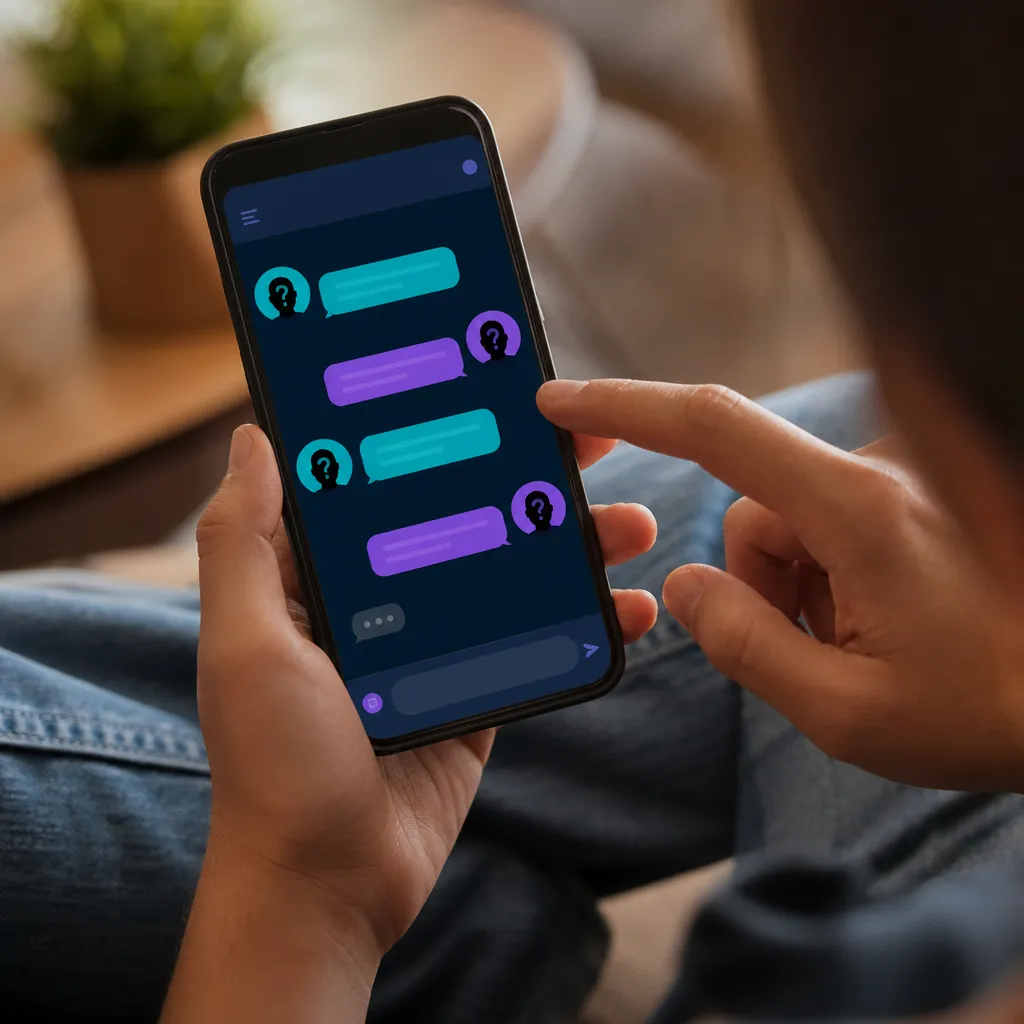
Anonymous messages have become an essential tool for honest and secure communication. Whether you want to share sincere feedback, report inappropriate behavior, or simply chat without exposing your identity, an app for receiving and sending anonymous messages offers that freedom.
 My Anonymous Voice
Age Classification:
Free Classification
Author:
Cleiton Varela Developer
Platform:
Android
Price:
Free
▶Download on Google Play
Announcements
Digital privacy is a right you deserve to protect in any context.Whether in corporate, educational or personal settings, the ability to communicate without revealing who you are opens doors to authentic dialogues that would not otherwise happen.
Why Use an App for Anonymous Messaging
You have probably faced situations where you did not feel comfortable to talk openly. Perhaps you have witnessed something wrong at work, but feared consequences for reporting. Or perhaps you want to give honest feedback to a friend, but want to avoid direct confrontation. An app specialized in anonymous messages removes this psychological barrier and allows you to communicate sincerely.
You can receive constructive criticism without knowing exactly who is criticizing, which reduces defensiveness.You can create safe spaces where people speak the truth without fear of judgment or punishment. These applications also protect your real identity while keeping track of the conversation, offering transparency and traceability when needed.
Real Use Cases: Where These Applications Make a Difference
In corporate environments, you can use an anonymous messaging app to create reporting channels for unethical practices. Employees often hesitate to report harassment, discrimination, or diversion of resources for fear of reprisals.With such a tool, the human resources department receives accurate information that would otherwise remain hidden.Big corporations already implement these systems as part of their internal governance, and you can facilitate this process by choosing the right platform.
In educational institutions, you can establish a space where students report bullying or harassment without exposing themselves to further risk. Teachers and school managers can identify patterns of harmful behavior and intervene early.In addition, you allow students to make complaints about administrative corruption, embezzlement or neglect without fear of academic reprisals.
Online communities often face the dilemma between freedom of expression and security. You can moderate a forum or group where members share anonymous messages, creating a space for genuine feedback.Moders can process suggestions for improvements, identify problematic members, and understand real group feelings.Community platforms use this mechanism to continuously improve based on authentic input.
In personal relationships, you can use anonymous messages as a bridge to difficult conversations. If you want to say something important to a friend but fear hurting him, you can send an anonymous message that makes him reflect without initial defensiveness.
The Key Features You Should Look For
When you are evaluating an app to receive and send anonymous messages, end-to-end encryption is non-negotiable.This means that no one, not even the creators of the app, can read your messages.You ensure that your communication remains private and secure, even if someone tries to intercept data or access servers.
You should also check if the app allows customization of links or QR codes.Many applications allow you to create a unique link that other people access to send messages just for you. This is essential if you want to distribute in a controlled way who can reach you anonymously. You can share this link in specific contexts, such as in a classroom, work team or group of friends.
Content moderation is another critical feature you need to consider. If you are getting too many messages, the app should allow you to review, categorize, and even block certain keywords or content patterns.You can filter spam, offensive messages, or malicious communications.
Secure history storage also matters.You want to be able to review old messages if necessary, especially in reporting or continuous feedback contexts.The platform should maintain an encrypted record that you easily access, without third parties being able to access that history.
Differences Between the Main Available Platforms
You will find anonymous messaging applications with different approaches and specialties. Some focus on extreme simplicity: you get a link, share and people send messages. Others are more robust, offering data analysis, reports and dashboards.Your choice depends on whether you are a casual user or someone managing a structured process of large-scale feedback.
Some platforms emphasize absolute anonymity, even for those who receive messages. You can’t track who sent each specific message. Others keep an anonymous but trackable record internally, allowing you to identify who sent each message if necessary. You choose the level of control you need: maximum privacy for the sender versus ability to investigate if something problematic happens.
The number of people who can send messages varies as well. Some applications focus on one-to-one communication. You create a personal link, share and receive messages. Others allow you to create multiple channels, rooms or thematic groups. You can segment messages by category, department or subject, making it easier to organize.
The availability of desktop versus mobile versions also differentiates the options.You can find native apps for Android and iOS that work offline partially. Or you can use web-based platforms that you access from any browser.
How to Implement Anonymous Messages in Your Specific Context
If you are in a company and want to implement an anonymous reporting system, start small.You can create an anonymous feedback link and share it only with a pilot department. Monitor how it works, collect feedback on the experience, and adjust settings as needed. After validating the process, you expand to the entire organization with confidence that it works well.
You must clearly communicate the policy of using your anonymous tool. Make it explicit whether messages will be investigated, who will have access to them, how they will be used and what the consequences of abuse are. Transparency about how you will process anonymous feedback increases trust and reduces fears that anonymity will be violated.
If you are running an educational space, integrate the anonymous messaging tool with your existing discipline and student support processes.You train managers and advisors on how to receive anonymous feedback and respond appropriately.Make it clear that taking reprisals against anyone who made an anonymous complaint is absolutely prohibited and will have serious consequences.
You should also consider the frequency of reviewing these messages. If you receive anonymous feedback constantly, you need a regular process to analyze, categorize, and act. You designate responsible for reading weekly, monthly, or as per volume as warranted. Ignoring anonymous messages undermines trust in the system and discourages future genuine contributions.
Security, Privacy and Legal Considerations
You need to understand that privacy does not mean impunity. Even with anonymous messages, if someone makes threats, incites violence or commits defamation, these actions are still illegal. You can be legally responsible if you allow your system to be used for crimes. Therefore, reviewing content and having clear moderation policies is essential.
Compliance with regulations such as LGPD (General Data Protection Law) is critical for you. If you are collecting messages from people in Brazil, the platform you use must comply with this legislation. You need to be clear about where data is stored, how it is protected, who has access to it and how long it will be retained. Lack of compliance can result in substantial fines.
You should also consider the technical security of the platform. Choose an app that has been audited by security experts, that regularly updates its code, and that responds quickly to vulnerabilities. An anonymous messaging system that is hacked compromises the privacy of all users, turning your security tool into a reliable one.
Backup and redundancy are practical considerations that you cannot ignore. If you implement an anonymous reporting system and it fails, people may lose trust in it or messages may be lost. You choose a platform with automatic backup, multiple data centers, and uptime guarantee.
Optimizing User Experience with Anonymous Messages
You want people to find it easy to use your anonymous messaging system. The interface should be intuitive: there can be no confusion about how to send a message or how to remain anonymous.If someone needs a five-page manual to send feedback, you have broken down the psychological barrier but created a technical barrier.
You should also offer appropriate incentives for participation.In a corporate context, you communicate that anonymous feedback will result in concrete actions.If you receive five reports about lack of protective equipment, you improve safety.If you receive feedback that changing meeting hours would improve productivity, you experience doing so. Visible results generate continuous confidence.
Visual design also matters. An anonymous messaging app should not seem uncomfortable or scary. Neutral colors, clean layout and welcoming language make people feel comfortable sharing honest thoughts. You avoid terms like “reporting” on public interfaces, preferring “feedback” or “suggestion”, even if internally you know that some messages are in fact reports.
You can include templates or categories to structure anonymous messages. If you want feedback on the team meeting, you offer a template with specific questions.If you want security reports, you provide a form that captures relevant information. Structure reduces confusion and helps you process information more efficiently afterwards.
Response time also creates experience. If someone sends an anonymous message and never hears talk again, it assumes that no one cares. You regularly communicate how anonymous feedback is being processed, without revealing sensitive information. Messages such as “we receive your suggestion and are investigating” or “your complaint has been forwarded to the appropriate department” keep the trust alive.
Finally, you consider the cultural context and diversity. People from different backgrounds may have different levels of comfort with technology. You offer multiple ways to send anonymous messages: via app, via web, even via printed form. You ensure that language barriers do not prevent someone from participating, offering support in multiple languages if your context requires it.