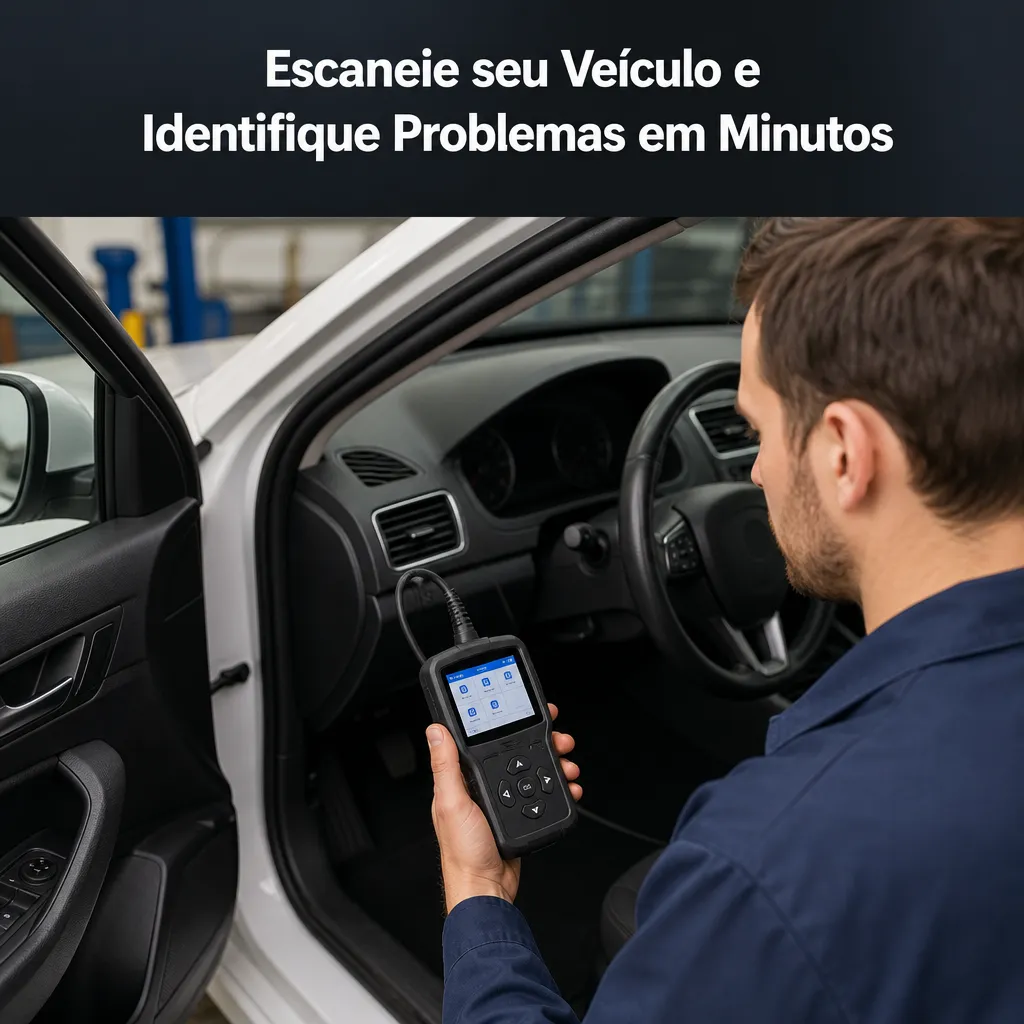
Scan Your Vehicle and Identify Problems in Minutes
Announcements
Do you want to know the real state of your car without spending a fortune on mechanics? Scanning vehicle problems is the solution.With the right technology, you identify faults in minutes and make informed decisions about maintenance and repairs.
Announcements
Modern vehicle diagnostics is no longer exclusive to specialized workshops.Today, you can access the same information that a professional uses, interpreting the error codes that the car’s electronic system automatically generates. This change has completely transformed the way vehicle owners understand and care for their machines.
How Fault Code Reading Works
Every modern car has an on-board computer that continuously monitors components such as engine, transmission, emissions system and brakes. When something works outside the normal parameters, this system records a fault code called DTC (Diagnostic Trouble Code). You do not see this information normally, but they are there, waiting to be read.
The scanning device works as an intermediary between your car and you. It connects to the OBD-II (On-Board Diagnostics) port of the vehicle, usually located under the dashboard, near the steering wheel. Once connected, the reader retrieves the stored codes and translates them into understandable language, showing exactly which system is in trouble.
The codes follow an international standard. They start with a letter indicating the category of the problem: P for power problems (engine), B for body, C for chassis and U for communication network problems. Then come numbers specifying the fault. A code P0301, for example, means ignition problem in the engine’s number one cylinder.
 Scanator (OBD2, Check Engine)
Classification:
^^^^^^^^^^^^^^^^^^””
3.13
Age Classification:
Free Classification
Author:
Antonio Villegas
Platform:
Android
Price:
Free
▶Download on Google Play
Types of Devices to Scan Your Vehicle
There are several categories of readers, each with different characteristics. Choosing the right one depends on your level of technical knowledge and the frequency of use you intend to give the device.
Basic code readers are the simplest and most affordable.They connect to the OBD-II port, read the error codes and display the description on a small display.This category includes very compact devices that you easily carry in the car glove.The limitation is that they show only general information and generally do not allow code cleaning or access to real-time data.
Intermediate scanners offer much more functionality. In addition to reading and cleaning codes, they show real-time data such as engine speed, temperature, fuel pressure and vehicle speed.Many have a color screen and allow you to generate reports.You can monitor performance while driving and investigate intermittent problems.
Professional scanners are complex tools used mainly by specialized mechanics.They offer deep access to the electronic system, allow reprogramming of components, specific tests and advanced diagnostics.For the ordinary owner, they are usually unnecessary for the complexity and high cost.
In addition to physical devices, there are smartphone apps that turn your phone into a code reader. These apps work through a low-cost Bluetooth adapter that you connect to the OBD-II port. The convenience is huge because the smartphone is always with you, but the quality varies greatly between different apps.
Step by Step to Scan Your Car
First, locate the OBD-II port on your car. In most Brazilian vehicles, it is under the instrument panel, usually on the left side. The port looks like a rectangular connector with 16 pins. If you can’t find it quickly, consult the owner’s manual or look for a photo of your specific model online.
With the car off, connect the code reader to the OBD-II port. The connector fits in a single direction, so do not force. You will hear a discreet click when it is well-fitted. Some readers start working immediately after connection, while others need you to turn on the car to start reading.
Start the car but do not start the engine if you have only started the ignition. Many readers can read codes in this state. If you need to start the engine, let it run idle while reading. The entire process usually takes from thirty seconds to two minutes. When it ends, the reader displays the codes found with their descriptions.
Write down all the codes displayed.Some readers allow you to photograph the screen or generate PDF reports.If you use an app on your smartphone, capture screenshots.This documentation is valuable to show to a mechanic or to compare if the problem worsens over time.
Once you get the codes, you have three options: search the meaning online to learn more, take the information to a trusted mechanic for professional interpretation, or investigate a little further using the reader itself if it has real-time monitoring function.There are no shortcuts here; each code requires context-based evaluation of your vehicle.
Understanding Reading Results
When you get the codes, understanding what they mean is crucial. A P0401 code indicates “Insufficient Flow of Engine Gas Recirculation”. It sounds technical, but basically means that the EGR system is not working properly. This can result in higher fuel consumption, uneven idling or even turning on the engine check light.
Not every code means your car will break tomorrow.Some indicate minor inconsistencies that the electronic system detected, but that may not affect the immediate handling of the vehicle.A code P0016, for example, signals misalignment of the valve control, which can range from a simple problem of worn current to more complex issues.
Codes that start with P0 usually relate to emissions or performance and can often be temporary. P1 usually indicates manufacturer-specific problems. If something like P0500 (speed sensor problem) appears, you will probably experience difficulties with automatic transmission. Already a P0300 (multiple ignition failures) may mean expired spark plugs or problem coils.
An important detail: a code does not disappear by itself. Some systems automatically clean after a certain number of driving cycles without recurrence of the problem, but this takes time. The code will remain in the system until you manually erase it through a reader, or until the mechanic solves the problem and reboots the system.
Advantages of Scanning Your Vehicle Regularly
Knowing the state of your car in advance is worth gold.When you identify a problem in the code P0740 (problems in the transmission torque converter) before it causes major damage, it saves hundreds or even thousands of dollars in repairs. Early detection is always cheaper than late correction.
You also gain bargaining power by selling the vehicle.Honest sellers disclose known issues, and with a diagnostic report you have concrete proof of what is working and what is not.Potential buyers respect this transparency and you set a fair price based on the actual state of the car.
Technical knowledge increases your confidence when dealing with mechanics.You do not come to the workshop without knowing what may be wrong and you are less vulnerable to unnecessary services.A basic reader is one of the best financial protection investments you can make as a vehicle owner.
Also, periodically scanning works as health monitoring. Just like you do annual medical check-ups, examining your car regularly prevents unpleasant surprises.If you notice that the same code constantly reappears, it means that the previous solution was not effective or that the problem has evolved, essential information to properly diagnose.
Common Errors when Scanning Car Problems
The most frequent error is to assume that a fault code is definitive. In reality, multiple causes can generate the same code. P0133 means problem in the oxygen sensor, but it can result from a really faulty sensor, damaged wiring, loose connection or even a blocked catalyst.
Many car owners clean the code immediately after reading it and expect the problem to disappear. This is counterproductive. If the problem that caused the code still exists, it will reappear in days or weeks. Cleaning should be done after the repair, not before, as a way to confirm that the problem has been solved.
Trying to repair everything at once based on a single read also causes waste. If you get five failure codes, not everyone can be responsible for the symptom you are feeling. Some may be secondary problems caused by the main problem. Investigating which code corresponds to the specific symptom saves time and money.
Ignoring warnings of critical codes is dangerous. If a code indicates improper braking, you should not drive long distances without investigating. Some problems directly affect safety and need immediate attention, even if the car continues to run seemingly normal.
Finally, confusing code reading with full diagnostics is common. A code reader is a tool, not the solution. It points to the problem, but does not solve it. To fix it, you need technical knowledge, quality parts and skilled labor.
When to Find a Professional
After scanning your vehicle, you know the problem code, but that does not mean you can repair it yourself. If you do not have mechanical experience, look for a qualified professional. Showing the code and the diagnosed report to the mechanic speeds up the work and avoids unnecessary diagnostics.
Some problems are clearly from professional jurisdiction.Works involving transmission, electric steering, antilock brake systems (ABS) or complex electronics require specialized tools and in-depth knowledge.A scanner reads the code, but repairing a faulty transmission module goes beyond the capabilities of an ordinary owner.
Also note if the same code reappears after repair. This suggests that the problem has been misdiagnosed or that the part installed is of inferior quality. A good mechanic re-inverts time into further investigation.
The key is to use the knowledge gained from reading codes to collaborate with the professional, not to compete with him. You know what the problem is; he knows how to fix it. This partnership makes the process more efficient and ensures better results for your vehicle.