New Application with X Ray Effect!
Announcements
A new application promises to revolutionize the way you view objects through layers. With X ray effect technology, this app allows you to see internal structures without the need for expensive professional equipment. The functionality arouses interest both in technology enthusiasts and professionals from various fields.
Announcements
In this article, you will learn about advanced strategies to make the most of this innovative tool.We will explore practical optimizations that transform the user experience and reveal use cases that go beyond the obvious. Find out how this technology can integrate into your daily workflow efficiently and strategically.
What is X Ray Effect Technology in the Application
X ray effect technology works through advanced computer vision algorithms that map hidden structures.The application uses infrared cameras and real-time processing to create a transparent visualization of internal layers of objects.This approach eliminates the need for traditional X ray equipment, making structural analysis accessible to ordinary users.
The differential of this solution is the intelligent integration of artificial intelligence with modern smartphone sensors.The algorithm learns patterns of material density and recreates an accurate visual representation of what exists beyond the visible surface. Compared to competing applications, this offers lower latency and greater accuracy in the three-dimensional rendering of internal structures.
Advanced Optimization Strategies for Better Performance
To maximize the efficiency of the application, you should adjust the camera resolution settings according to your device. Apps that use X ray effect consume a lot of power, so opt for medium resolution instead of ultra-high extends the battery life without significantly compromising visual quality.Test different settings in your most frequent environments to find the optimal balance between accuracy and consumption.
Ambient lighting directly interferes with the accuracy of the results obtained by the digital X ray effect. You will achieve better views in environments with controlled natural light or with calibrated LED lighting, avoiding direct reflections on the camera. Position yourself perpendicular to the analyzed object and keep the device stable, as sudden movements reduce the quality of the detection of internal layers.
Scanning storage is another critical strategy for optimizing your in-app experience. Setting up automatic backup of cloud analytics allows you to access long-term histories without overloading your mobile phone’s internal memory. You can organize scans by date, object type, or project, facilitating future comparisons and evolutionary analysis of continuously monitored structures.
Practical Applications in Different Professional Segments
In civil engineering, the X ray effect of the application assists preliminary inspections of structures without having to disassemble components. You can analyze embedded pipes, electrical wiring passages and internal structural reinforcements, saving significant time in initial surveys. Professionals report up to 40% reduction in planning time for renovations when using this technology as the first diagnostic layer.
For restoration and conservation professionals, the app offers unique possibilities for analyzing ancient crafts without damaging delicate pieces.You can identify historical construction techniques, reveal hidden paint layers, and detect structural damage to valuable sculptures and furniture. This non-invasive approach converts restoration work into a more informed and careful process.
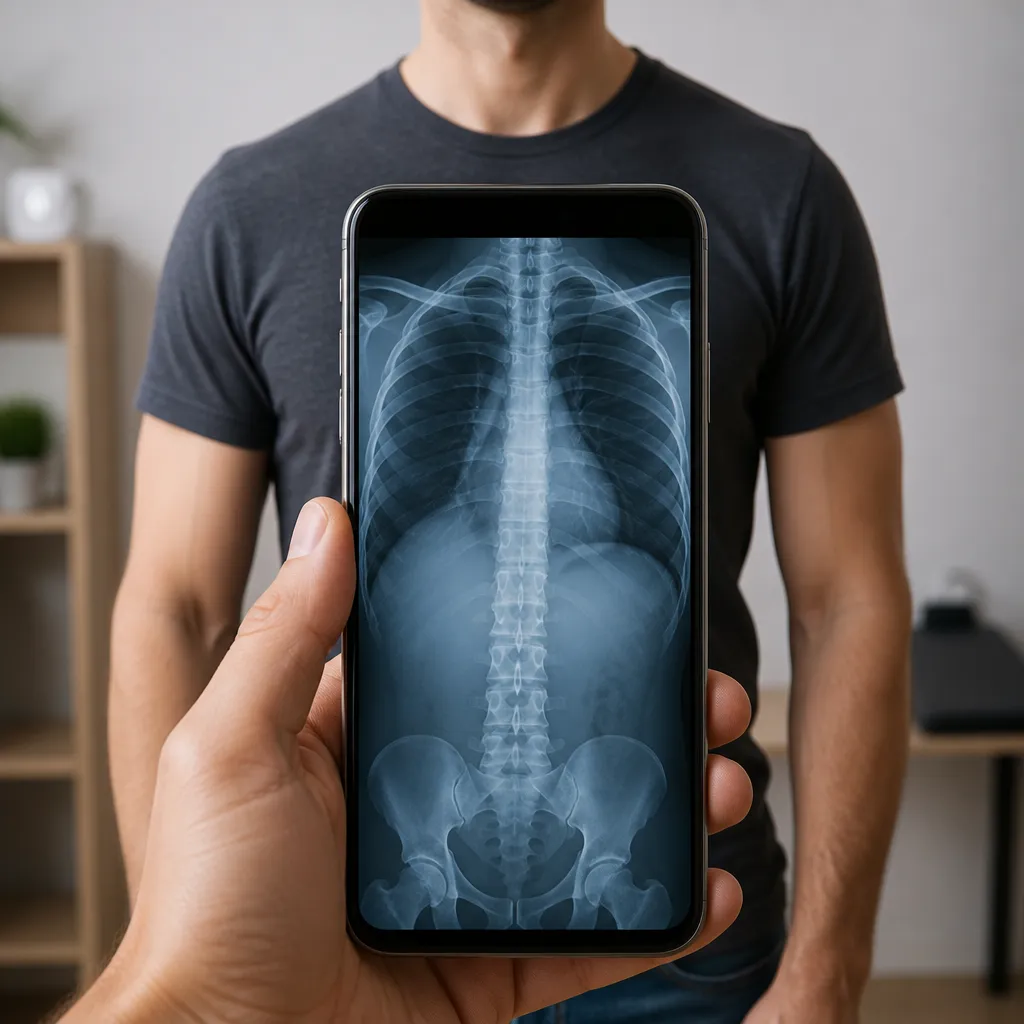
In alternative medicine and wellness, some professionals explore the application for bone density analysis and mapping of body structures. Although it does not replace formal clinical diagnoses, it offers an educational and preliminary visualization that complements postural assessments.You find adepts in physiotherapy clinics that integrate technology to improve communication with patients about structural findings.
Technical Limitations and Precision Considerations
The digital X ray effect has inherent limitations that you must understand before relying on critical analysis. The accuracy varies according to the density of the analyzed material, being excellent in objects with high density contrast, but inaccurate in homogeneous materials. Very dense metals, reflective glasses and certain plastics can interfere with the computer vision algorithm, resulting in distorted or partially illegible visualizations.
The penetration depth of the effect is also limited, unlike real X rays that cross significant thicknesses.You can analyze structures up to a few centimeters deep with acceptable accuracy, while thicker objects present progressive degradation in visual quality. For applications that require analysis of very deep structures, you still need traditional professional equipment.
Variability between smartphone devices is a determining factor in the app usage experience. Superior quality camera sensors generate significantly better results, so you get distinct experiences depending on the mobile model used. Top-of-the-line devices offer more fluid real-time processing and clearer details compared to input phones.
Practical Tips for Integrating the Application into Your Workflow
Start by documenting all scans performed with detailed contextual metadata. You should include date, time, lighting conditions, object model, and textual observations in each captured analysis. This habit facilitates future queries and creates a valuable database that, over time, allows you to identify evolutionary patterns and historical comparisons of periodically monitored objects.
Invest in accessories that stabilize your device during more complex scans, such as small tripods or specialized smartphone mounts. You reduce motion errors and get more consistent views when you perform multiple analyses of the same object from different angles.
Establish cross-validation protocols whenever the application is used in professional or investigative contexts. You should never rely solely on the digital X ray effect for critical decisions without confirming findings through alternative methods. This conservative approach maintains the technical integrity of your work and avoids erroneous conclusions based on ambiguous interpretations of digital visualizations.
Future Perspectives and Technology Evolution
X ray application developers constantly work on improvements of artificial intelligence algorithms that extend the accuracy and depth of penetration of the analysis. You can expect future updates that integrate specialized machine learning for specific materials, allowing even more accurate identifications of internal composition. The convergence with augmented reality technologies also promises immersive experiences where you visualize internal structures overlapping the real environment.
Compatibility with wearables and IoT devices will expand the use cases of this technology beyond conventional smartphones.You can use augmented reality glasses or smartwatches equipped with similar sensors for continuous analysis and hands-free documentation. This evolution will make the digital X ray effect tool even more accessible and integrated into the professional daily life of multiple segments.
Security and privacy regulations also evolve in parallel with the technological development of the application. You should follow emerging ethical guidelines, especially in contexts where structural analysis touches aspects of personal privacy.International organizations work on frameworks that balance technological innovation with data protection and end-user rights.