How to See You in the Mafioso Look
Announcements
The mafioso look is a classic visual style that combines vintage elegance with an aura of power and mystery.This iconic look, often associated with crime and drama cinema, is characterized by refined clothing, sophisticated accessories and a confident attitude that attracts many people on the internet.
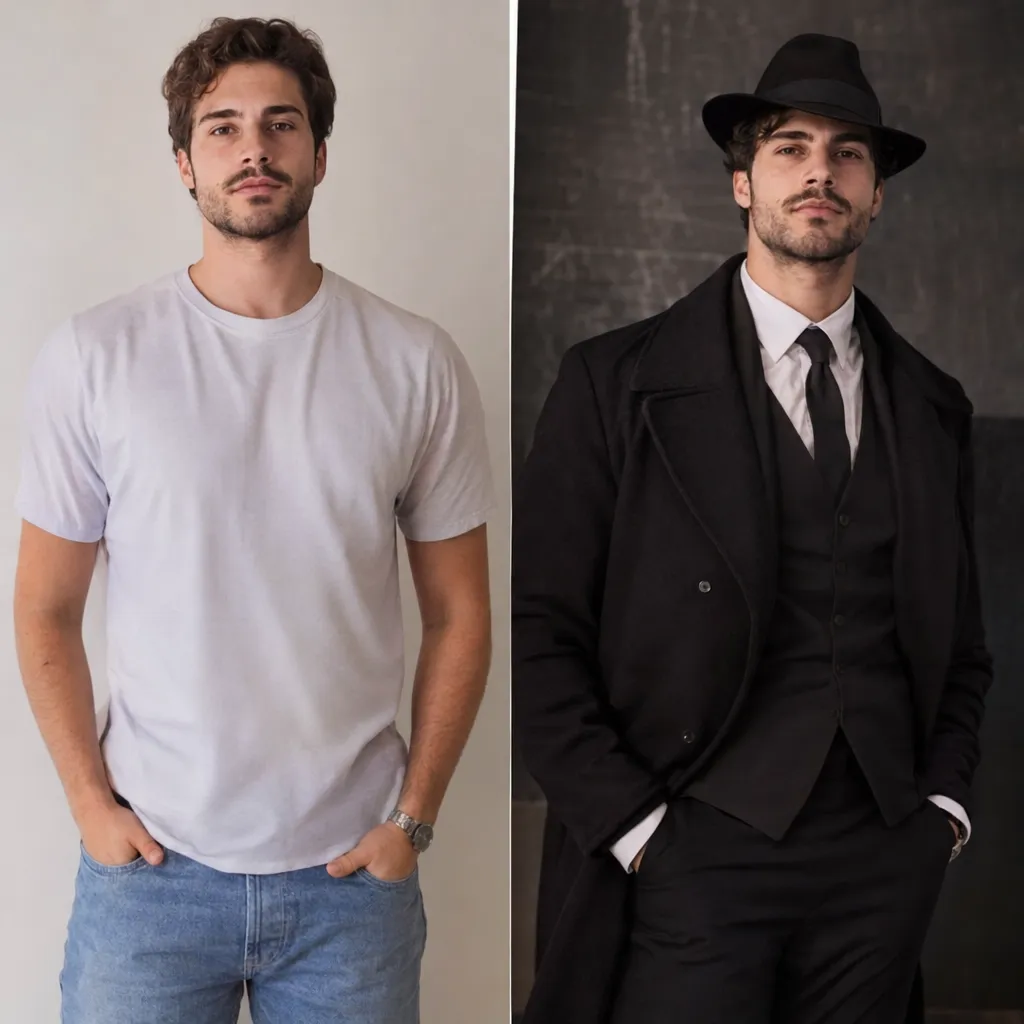
The transformation of your image using artificial intelligence has opened endless possibilities to try new styles without investing in expensive clothes or going through permanent changes. You can now visualize how it would look in different looks, including the mafia look, testing combinations quickly and affordably before making any decision. This technology has democratized access to image consulting and allowed anyone to explore their visual creativity in a practical and economical way.
Announcements
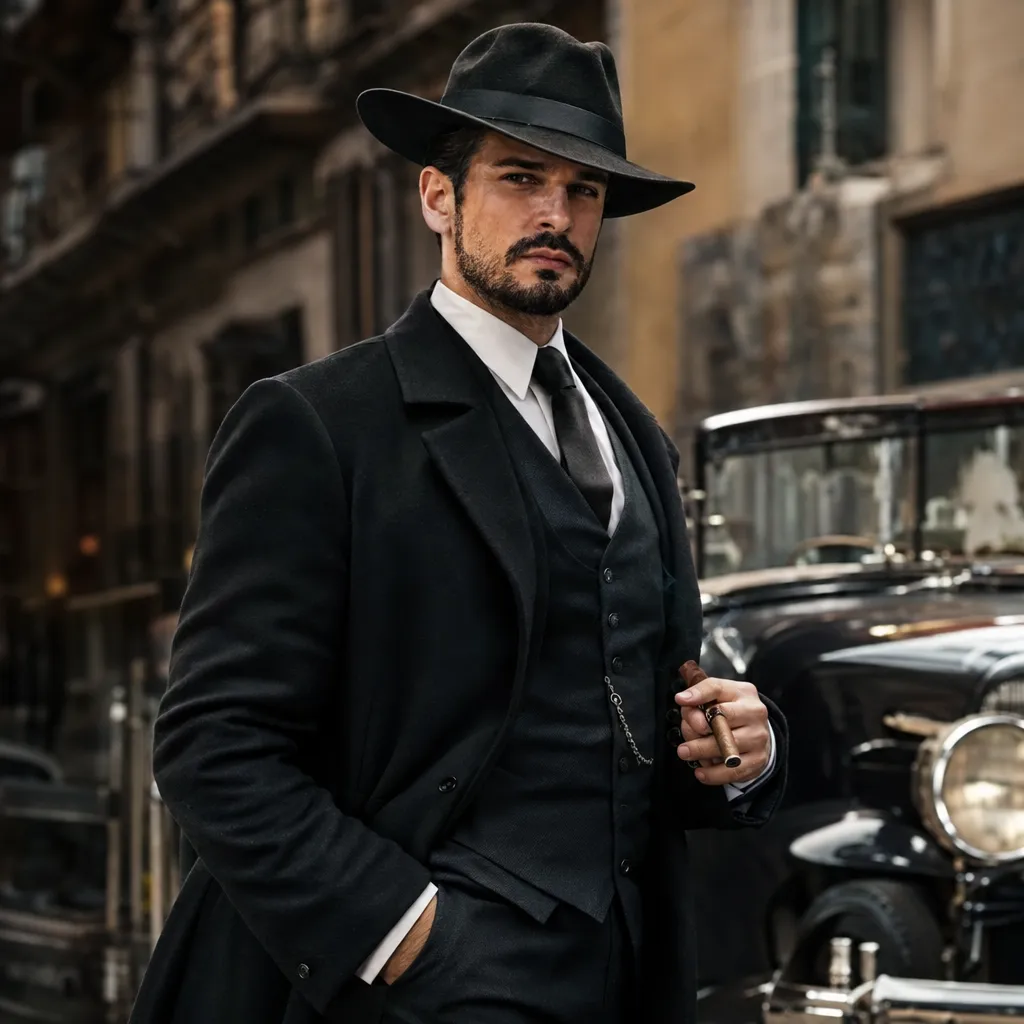
The main elements of the mafia look include suits well cut in dark colors such as black, lead gray and chocolate brown, combined with white shirts or neutral tones that create sophisticated contrast. Accessories such as fedora or panama hats, rich-toned neck scarves, gold or silver rings, discreet chains and impeccably polished leather shoes complete the composition. The hairstyle is also fundamental: well-combed and aligned hair, often with a subtle shine, complement the elegance of this style that refers to the golden era of a cinema full of personality.
Using artificial intelligence to simulate the mafioso look in your image is a surprisingly simple process that anyone can do in minutes. You just need a clear photo of your face, preferably a front or three-quarter photo, and then describe the look you want mentioning features such as dark suits, specific accessories, aligned hairstyle and the atmosphere you want to convey. AI will process your instructions and generate a transformed image showing how you would look in this style, allowing you to visualize different variations by adjusting details such as the color of the suit, the type of hat or the intensity of the eyebrow.
To significantly improve the results you get from AI when simulating the mafia look, provide detailed descriptions mentioning specific references, such as mentioning classic crime movies you admire or public personalities whose style approximates what you seek. Specify details such as the texture of the fabric you prefer, the amount of shine in the accessories, the exact type of hat you imagine, and even the facial expression and posture you want to demonstrate. The more visual information you can communicate to AI, the more accurate and aligned with your expectations will be the end result, saving time and avoiding frustrations with images that do not match your desire.
Adapting the mafioso look to your personal style means not rigidly copying the cliche, but using the main elements of this look to create an authentic version that reflects your personality and preferences. If you prefer lighter colors, consider suits in light gray or beige, maintaining elegance and sophistication without the traditional dark tone. Perhaps you want to incorporate only a few elements, such as a fedora hat with your everyday clothes, or develop a more casual interpretation that preserves the confident attitude and visual refinement without looking like a fantasy. AI can help you test these endless variations, allowing you to find the version of the mafioso look that genuinely resonates with who you are.
Experiencing visual transformations with artificial intelligence requires some important care so that the experience is safe and satisfying for both you and the people around you. Never share your original photos on unfamiliar platforms or that do not offer guarantees about data privacy, as your image is a valuable personal asset that deserves protection. Understand that the images generated by AI are simulations and may not perfectly reflect how you would actually appear in real life with these clothes and accessories, especially considering factors such as lighting, photo quality and execution details.
After choosing and confirming the mafioso look you want to experience in real life, the next step is to start building your wardrobe gradually, investing first in the main pieces as one or two suits well cut in colors that work with your skin tone and preferences. Search stores that offer quality in formal clothes, consider consulting a professional tailor for adjustments that value your body, and start collecting accessories strategically over time. Record the images generated by the AI in an album on your mobile phone to use them as a reference when buying clothes or accessories, ensuring visual coherence between what you have imagined and what you are acquiring, gradually transforming the digital look into a tangible reality.
Current Trends in Using AI for Visual Transformations
Artificial intelligence for personal style simulation is evolving rapidly, with new tools constantly emerging that offer increasing accuracy in digital transformations. The most relevant trends include applications that can maintain unique features of your face while completely modifying the style of clothing, hair and accessories, creating images that look like real photographs instead of illustrations. Many users are using these tools not only to explore different looks, but also for practical purposes such as virtual image consulting, preparation for special events and even as a way to gain confidence before making real changes in their appearance.
Why the Mafioso Look Remains Relevant
The Mafia style remains popular and contemporary because it represents timeless concepts such as sophistication, power and confidence that transcend decades and passing fads. Digital influencers, celebrities and professionals from different fields have embraced elements of this visual, adapting it to modern contexts and proving that classical elegance never goes out of fashion completely. Cinema and television continue to feed this fascination through series and films that reinterpret the crime genre, keeping the look alive in popular culture and inspiring new generations to explore this particular style.
Technical Elements of AI for Image Transformation
The technology behind AI tools that transform your image uses trained advanced neural networks in millions of photographs and illustrations to understand complex visual patterns.These networks can identify specific features of your face, body and proportions, maintaining them while applying coherent stylistic changes to the rest of the image. The process involves multiple layers of processing that adjust colors, textures, lighting and proportions so that the end result looks convincing and visually harmonious, not just a random overlay of elements.
Step by Step to Generate Your Mafia Transformation
The process begins by selecting a quality photo of yourself, where your face is clearly visible and well lit, avoiding sunglasses or objects that obstruct your strokes. You then write a detailed description of the desired look, being specific about elements such as “buttoned black suit with wide lapels, impeccable white shirt, thin tie in dark tones, lead gray fedora hat, and serious expression with slightly clenched eyebrows.” Send your photo and description to the chosen AI tool, wait for processing that usually takes a few seconds to a few minutes, and then review the result generated to check if it matches your expectations.
If the initial result does not fully meet your expectations, refine your description by adding more detail or adjusting specific elements you want to modify. Explicitly mention fixes like “increase the brightness of gold accessories” or “deepen the color of the suit” or “leave your hair more aligned behind.” Some tools allow iterative adjustments where you provide feedback and AI progressively improves the result until you are satisfied, turning the process into a continuous creative collaboration between you and the machine.
Practical Applications Beyond Fashion
Beyond simple entertainment and aesthetic exploration, using AI to visualize the mafioso look offers genuine practical benefits for real decision-making about fashion and personal image. Professionals in areas such as law, politics or business can test how a more formal and sophisticated look affects their presence in corporate environments, helping them confidently invest in expensive pieces after confirming they like the result.People preparing for important events such as weddings, professional photographs or public appearances can use this technology to plan their look in advance, ensuring that everything blends harmoniously and that they feel comfortable and confident.
Professional photographers are starting to use AI to propose visual concepts to their clients before actual photo shoots, saving time and money by avoiding inefficient physical testing. Personal stylists now complement their services by offering AI-created simulations to clients, allowing them to explore multiple looks in a single session without having to wear different clothes.This hybrid approach, combining human knowledge with AI visualization capabilities, is setting a new standard in image consulting services.
Challenges and Limitations of Current Technology
Despite impressive advances, AI still has important limitations that you should understand when using these tools to simulate visual transformations. Artificial intelligence can sometimes generate physically impossible or inaccurate details, such as disproportionate hands, accessories that do not follow laws of physics or unrealistic textures that do not correspond to how materials work in real life. Some algorithms have difficulties with certain skin tones, hair types or specific facial features, generating less accurate results for some people compared to others, reflecting biases present in training data.
Lighting and environmental context also significantly affect how any look will appear in reality, and AI often simulates ideal studio conditions that may not reflect everyday environments where you will actually wear your clothes.You may be disappointed to acquire the perfect AI suit only to find that under normal natural or artificial lighting, the colors and proportions do not look as impressive as in digital simulation. These limitations do not invalidate the value of technology, but highlight the importance of maintaining realistic expectations and seeing the images generated as inspiration and general direction, not as accurate guarantees of results.
Best Practices for Best Results
To get the best possible results when using AI to turn your image into the mafioso look, start by investing time in finding the right tool that aligns with your goals and budget.Some platforms offer free versions with limited functionality, while others charge monthly subscriptions or credits per generated image, and trying out a few different options helps you figure out which interface and output quality works best for your needs. Take time to study examples of successful transformations created by other users by analyzing how they describe their visuals and which prompt techniques result in more impressive images.
Keep a file of your favorite AI-generated images, organizing them by category or style for future reference when you’re buying real-life clothing or accessories. Take notes on which tool produced which result, note which descriptions worked best, and use this accumulated information to continuously improve your ability to visually communicate with AI. This systematic approach turns digital experimentation into a continuous learning process that serves as a lasting investment in your personal understanding of style and image.
Share your creations with trusted friends or online communities dedicated to photography, fashion and AI, seeking constructive feedback that helps you refine your visual choices. Other people’s perspectives often reveal aspects you might not have considered, such as how a visual works when viewed from different angles or in different social contexts. This type of collaborative dialogue enriches your exploration of personal style and prevents you from getting stuck in a tunnel vision of what you should look like.
The Future of Visual Transformation with Artificial Intelligence
The future scenario for AI image transformation technology promises even more impressive capabilities, with increasingly sophisticated models capable of simulating virtually any visual change with impeccable photorealistic accuracy.It is expected that tools will soon allow real-time visualizations where you can see yourself in different looks while moving and making varied facial expressions, not just in still images. Integration with augmented reality (AR) is developing so that you can point your phone at a mirror and instantly see how any outfit or accessory would look on you, completely revolutionizing the shopping experience and fashion experimentation.
Fashion and retail companies are investing heavily in these technologies, recognizing their potential to reduce product returns, increase customer satisfaction and create more personalized and interactive shopping experiences.It is hoped that soon you will be able to do completely virtual style consulting sessions with image experts who use AI to generate highly personalized suggestions based on your preferences, body, skin tone and lifestyle. These technological evolutions will further democratize access to fashion knowledge and personal consulting that was historically only available to people with significant resources.
Data security and privacy are also becoming higher priorities in the industry, with new regulations being implemented to ensure that your personal images are protected and used only as you authorize. Responsible companies are developing more secure infrastructures where your photos are processed and disposed of quickly, never stored on servers for future reuse. As a user, you should check the privacy policies of any tool you use, seeking explicit guarantees about what happens to your images after processing.
Understanding these trends and future developments helps you anticipate changes in the technology landscape and prepare to seize new opportunities as they arise. Visual transformation through artificial intelligence is no longer a futuristic novelty and has become a practical and accessible tool that anyone can now use to explore their creativity, test new styles and gain confidence about real fashion decisions and personal image. The mafia look represents only one among infinite visuals that you can simulate, but the methodology and best practices discussed in this article apply to virtually any aesthetic transformation you wish to explore using AI technology.