Automotive Scanner: See How It Works and How to Use
Announcements
An automotive scanner is an electronic tool that connects to your vehicle’s diagnostic system to identify faults and mechanical problems.If you want to keep your car running smoothly and avoid surprise repair costs, understanding how this equipment works is critical.
continue on to the full guide:
 FREE GUIDE
Automotive scanner: complete operating guide and practical use
✓Free
✓Diagnosis step a
✓Error codes
VIEW APP¹
📖 Reading 2 min · at no cost
Automotive diagnostic technology has evolved significantly in recent years, bringing increasingly affordable solutions to both professional workshops and owners who like to take care of the vehicle itself.In this article, you will learn how these devices work, what are the main trends in the market and how to use them practically and effectively.
Announcements
What is an Automotive Scanner and How It Works
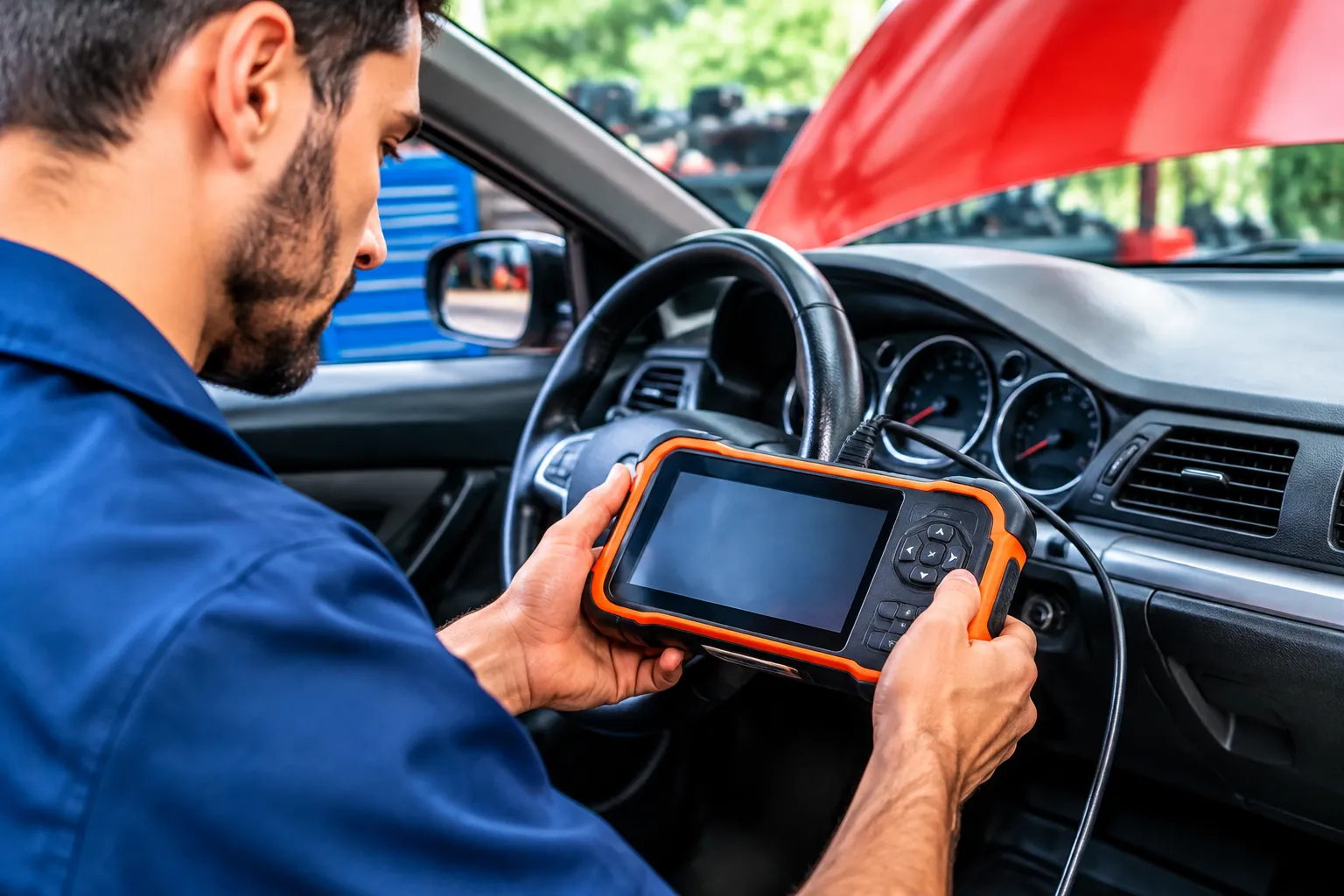
An automotive scanner is a device that reads the error codes generated by the engine control unit (ECU) of your car. When something does not work properly, the embedded system records this information and turns on the engine check light on the dashboard. The scanner allows you to access this data directly, without having to take the vehicle to a workshop.
The operation is relatively simple: you connect the device to the OBD-II (On-Board Diagnostic) port, usually located under the instrument panel, near the steering wheel.Most cars manufactured from 1996 have this standardized port, which facilitates the use of the scanner in different makes and models. After connection, the equipment communicates with the car’s computer and transmits the information to a screen or to an application on your mobile phone.
Modern scanners use communication protocols such as CAN (Controller Area Network) to extract data in real time. This means you can view information about engine temperature, revolutions per minute (RPM), fuel consumption, air speed and dozens of other parameters.In addition to errors, the scanner also offers predictive data that helps prevent future failures.
Current Trends in the Automotive Scanners Market
The automotive diagnostics market is undergoing important transformations, driven by wireless technology and integration with mobile applications. Today, many scanners work via Bluetooth, allowing you to connect to your smartphone or tablet wirelessly. This practicality represents a considerable change compared to the old models, which required permanent cables and bulky equipment.
Another trend is the rise of artificial intelligence applied to diagnostic data.Specialized platforms now offer automatic analysis that interpret error codes and suggest possible causes based on histories of millions of vehicles. You do not need to be an experienced mechanic to understand what is happening with your car. Algorithms do the heavy work of analysis and provide clear recommendations on the next steps.
Compatibility with electric vehicles is also present in this evolution. As more electric cars are circulating on the streets, state-of-the-art scanners are being adapted to diagnose battery systems, electric motors and charging systems.This expansion ensures that diagnostic technology keeps pace with the future of mobility.
How to Use an Automotive Scanner: Practical Step-by-Step Guide
Using an automotive scanner is a straightforward process that anyone can master quickly. The first step is to locate the OBD-II port of your vehicle, which is usually positioned horizontally underneath the dashboard, on the driver’s or passenger’s side.
With the engine turned off, connect the scanner to the OBD-II port and wait a few seconds for the device to communicate with the car’s computer. Some models automatically turn on when they detect the connection, while others require you to press a button. After startup, the scanner looks for error codes (DTCs) stored in the ECU memory.
On the screen or in the application, you will see a list of codes, usually starting with letters such as P, B, C or U, followed by numbers. Each code represents a specific problem. For example, the code P0301 indicates a misfire in cylinder number one. The scanner offers simple language descriptions of what each code means, helping you understand the problem without the need for deep technical knowledge.
You can also use the scanner to view real-time data while the engine is running. This allows you to monitor parameters such as coolant temperature, fuel pressure and battery voltage.Some scanners allow you to record this data in a file for further analysis or even to take to a workshop if you decide that the repair is above its capabilities.
Differences Between Professional Scanners and Basic Models
There are basically two levels of scanners on the market: the basic models for the home user and the professional equipment for workshops. Basic scanners read error codes and offer essential diagnostic functions at an affordable price, usually between one hundred and three hundred reais. They are perfect if you want to monitor the overall health of your car without high investments.
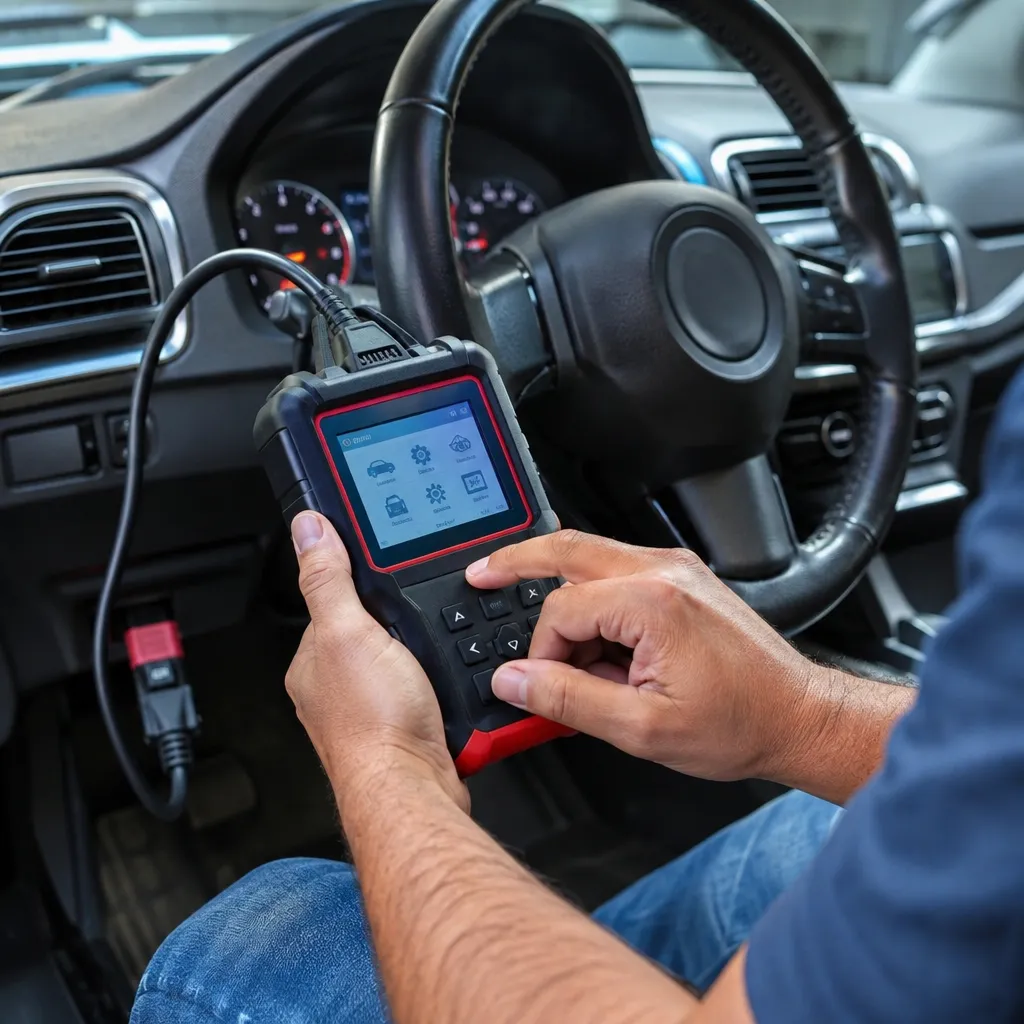
Professional scanners, on the other hand, offer advanced features such as code cleaning, sensor calibration, key programming, actuator testing and access to proprietary brand-specific protocols.These equipment cost anywhere from a thousand to ten thousand dollars or more, depending on the brand and the features included.They are required for a workshop that works with multiple vehicle brands and needs to offer complete diagnostic and repair services.
An intermediate choice that has gained popularity is the Bluetooth scanner connected to an application on the mobile. These devices combine affordable price with reasonable functionality, offering a good cost-benefit for owners who want more control over the maintenance of the vehicle. The portability and ease of use make these models ideal for those who want to start without compromising a large amount of money.
Best Practices when Using an Automotive Scanner
When working with a scanner, always keep the engine off when connecting or disconnecting the device. This protects both the equipment and the car electronics from possible damage caused by voltage spikes. After connecting the scanner, wait a few seconds before starting the engine, allowing the system to communicate properly.
Do not ignore unique codes that appear only once. Sometimes intermittent failures generate codes that disappear after a few hundred kilometers. If the code does not return, it may have been just an isolated event. However, if the same code appears repeatedly, it is a sign that there is a real problem that deserves immediate attention.
Keep your data organized and record the error codes you observe over time. This history is valuable for identifying patterns and understanding if a problem is getting worse or if it is really sporadic. If you end up taking the car to a workshop, having this record facilitates professional diagnosis and saves the mechanic time.
Remember that a scanner provides information, not magic solutions.Error code is not the same as full diagnosis, especially in complex problems. A bad sensor, a loose wire or a corrosive connection can all generate the same code. Therefore, combining the use of the scanner with a careful visual inspection is critical to solving problems effectively.
When to Seek Professional Help
Although the scanner provides valuable information, there are situations when you should seek help from a qualified professional.If the error code refers to safety-critical systems such as brakes, airbags or steering, do not try to fix it on your own. These systems require specialized knowledge and specific tools that only a properly equipped workshop offers.
Intermittent problems can be particularly challenging to diagnose with a basic scanner. If code appears sporadically and you cannot identify a clear pattern, a professional technician with more sophisticated equipment can utilize advanced diagnostic techniques.
Also consider asking for professional help if the repair involves extensive disassembly of components or if the solution requires programming electronic modules. A scanner identifies the problem but runs the solution requires in-depth practical knowledge. Investing in professional diagnostics can come out cheaper than trying to fix something you do not completely master and make the situation worse.
Practical Conclusion: Your Next Step
Understanding how an automotive scanner works puts you in a position of control over the health of your vehicle. With this tool, you can catch problems early, avoid costly emergency repairs and make informed decisions about the future of your car. Automotive diagnostic technology is more affordable than ever, and trends indicate that it will continue to evolve to offer more features at even lower prices.
The investment in a scanner suited to your needs is worth it, especially if you plan to keep your vehicle for many years.Start with a basic model to learn how to use the tool, and as your confidence increases, explore more advanced features. Always remember that the scanner is your ally in knowledge, but it does not replace the experience and skills of a professional when really necessary.